
Formality is a dial, not a setting. Three outfit formulas built around one adjustable element each — so you cover the uncertainty instead of betting on it.

The invitation says “dressy casual.” Or “smart.” Or nothing at all — just a time, a place, and a host you don’t know well enough to text. You stand in front of the closet doing the worst kind of math: if I overdress I’ll feel ridiculous; if I underdress I’ll feel worse. So you try to guess — and guessing is exactly the trap.
Here’s the reframe: formality is a dial, not a setting. The trick isn’t guessing the room correctly. It’s wearing something adjustable — an outfit with a single “formality lever” you can move up or down once you see the room. Every formula below is built around one lever: one swap, one addition, one removal that shifts the whole outfit a full register. You don’t bet on the dress code. You cover the spread.
A note on scope, stated plainly: these formulas target the ambiguous middle — smart casual through cocktail-adjacent. They do not cover true black-tie (that’s a gown, no lever saves you) or true casual (a barbecue needs no dial). Each formula names what it doesn’t cover. Nothing here promises universal suitability, because nothing has it.
Formula 1: The column dress — the shoe lever
The base: A simple sleeveless knit midi dress in a dark neutral, with low block heels and small earrings. This is the middle of the dial: neat, intentional, unremarkable in the best way.
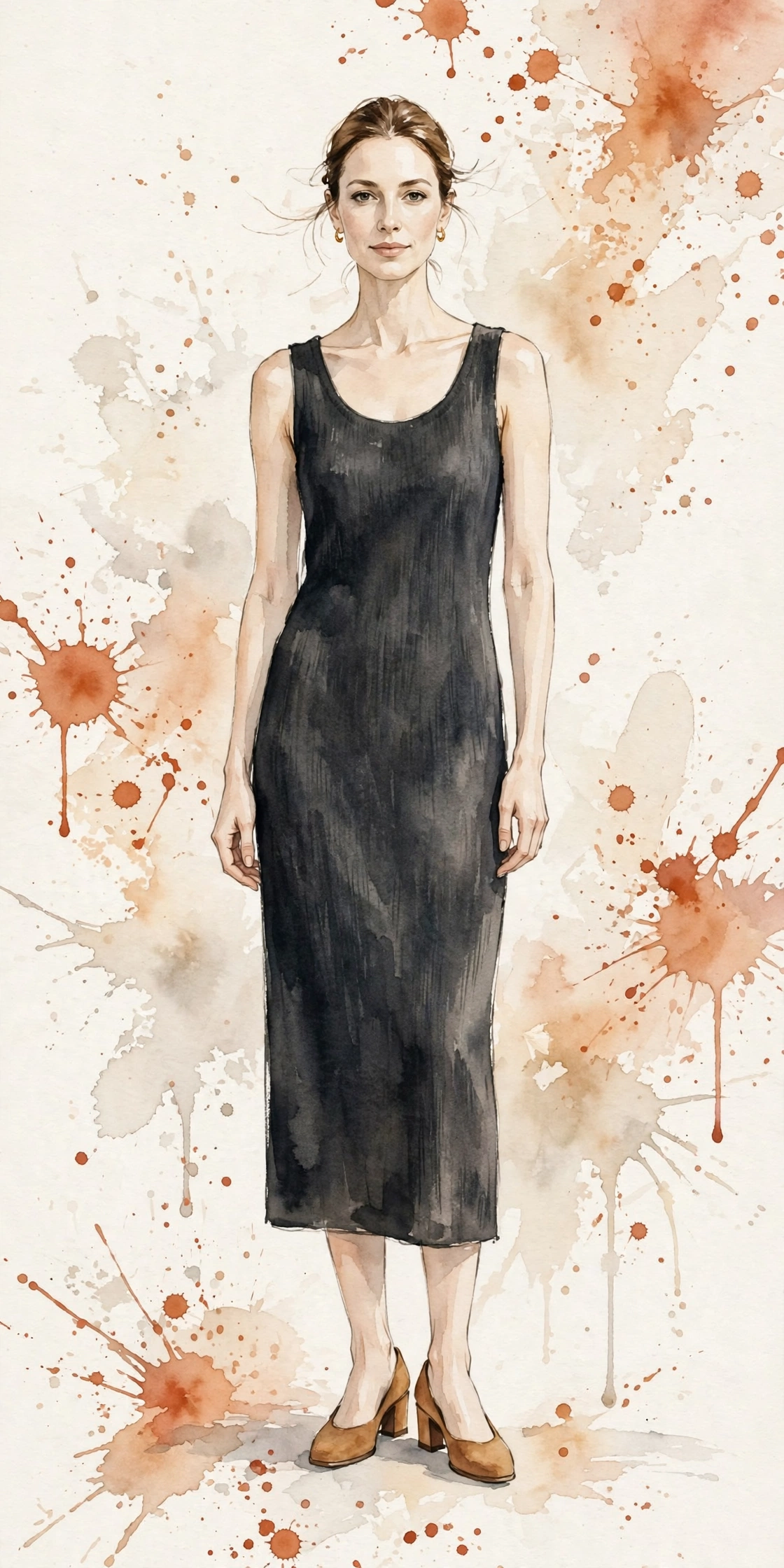
The lever — shoes. Dial up: swap to strappy heeled sandals and add a bolder earring. The dress hasn’t changed; the register has. Dial down: swap to pointed flats. Same dress, same earrings — one register lower.
Why it works: The dress is a blank column — no detail that commits it to a register. All the formality information lives in the shoes and jewelry, which are the two things you can change in a bathroom in ninety seconds. Pack the alternate shoes; decide on arrival.
Does not cover: true black-tie, outdoor summer events where heels sink into grass, or anything requiring sleeves.
Formula 2: The blazer suit — the layer lever
The base: Tailored trousers, a simple shell top, and a structured blazer. Worn complete, this reads as the top of the ambiguous middle — confident, finished.
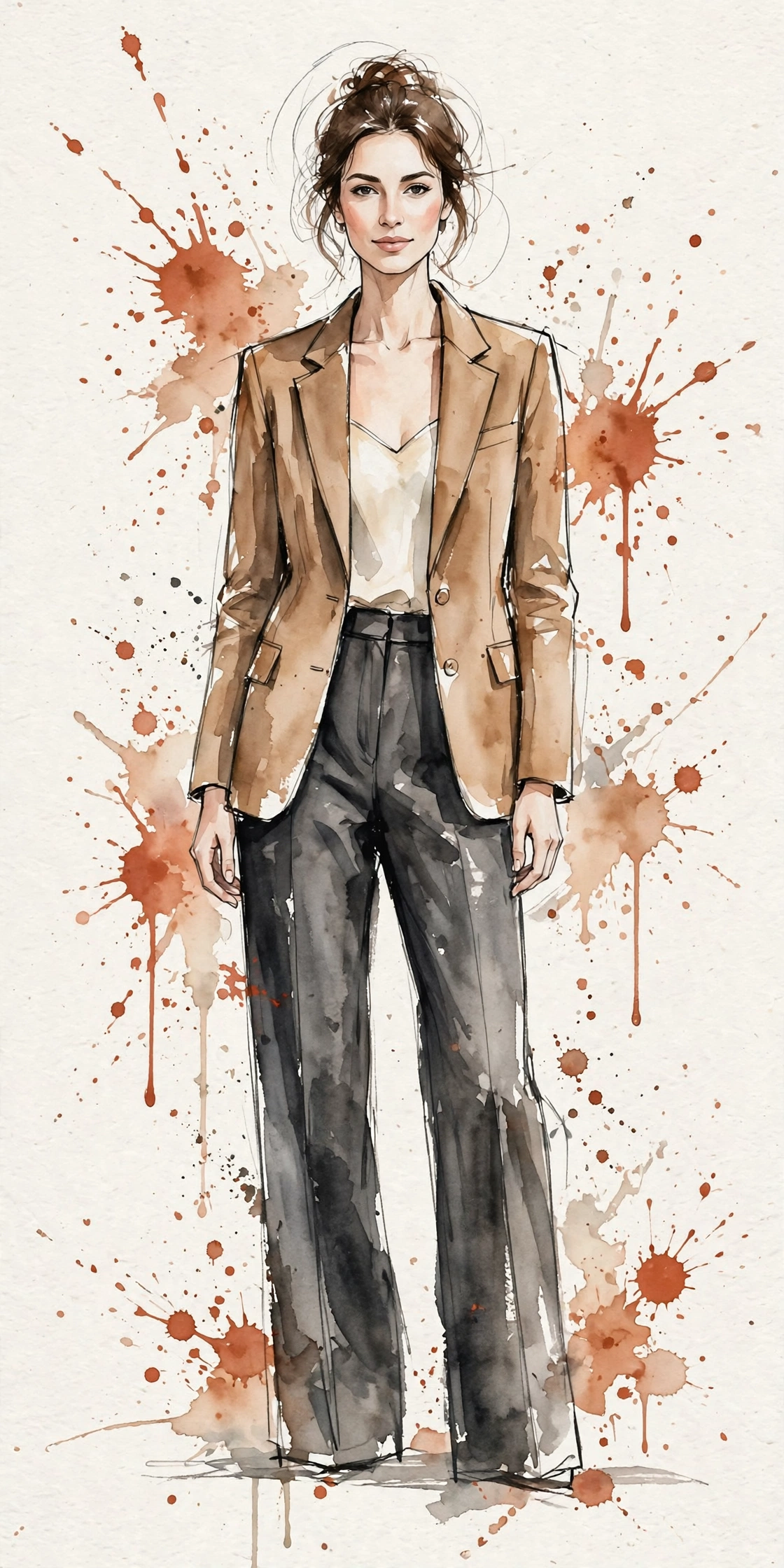
The lever — the blazer. Dial up: keep the blazer on, add a silk scarf or statement earring at the neck. You’re at the ceiling of this formula’s range. Dial down: remove the blazer, roll the shell’s sleeves once. The trousers keep it intentional; the missing blazer drops it a full register.
Why it works: A blazer is the single most legible formality signal in a wardrobe — its presence or absence is unambiguous to every observer. And it’s removable without a bag, without a bathroom, without a plan. The trousers do the quiet work underneath: they hold the outfit together in both positions.
Does not cover: hot-weather events (a blazer you can’t wait to remove is a liability, not a lever), true cocktail, or creative-casual rooms where tailoring reads as stiff.
Formula 3: The skirt and knit — the accessory lever
The base: A midi skirt in a fluid fabric, a fine-gauge knit tucked in, and loafers. This sits at the lower-middle of the dial — relaxed but deliberate.
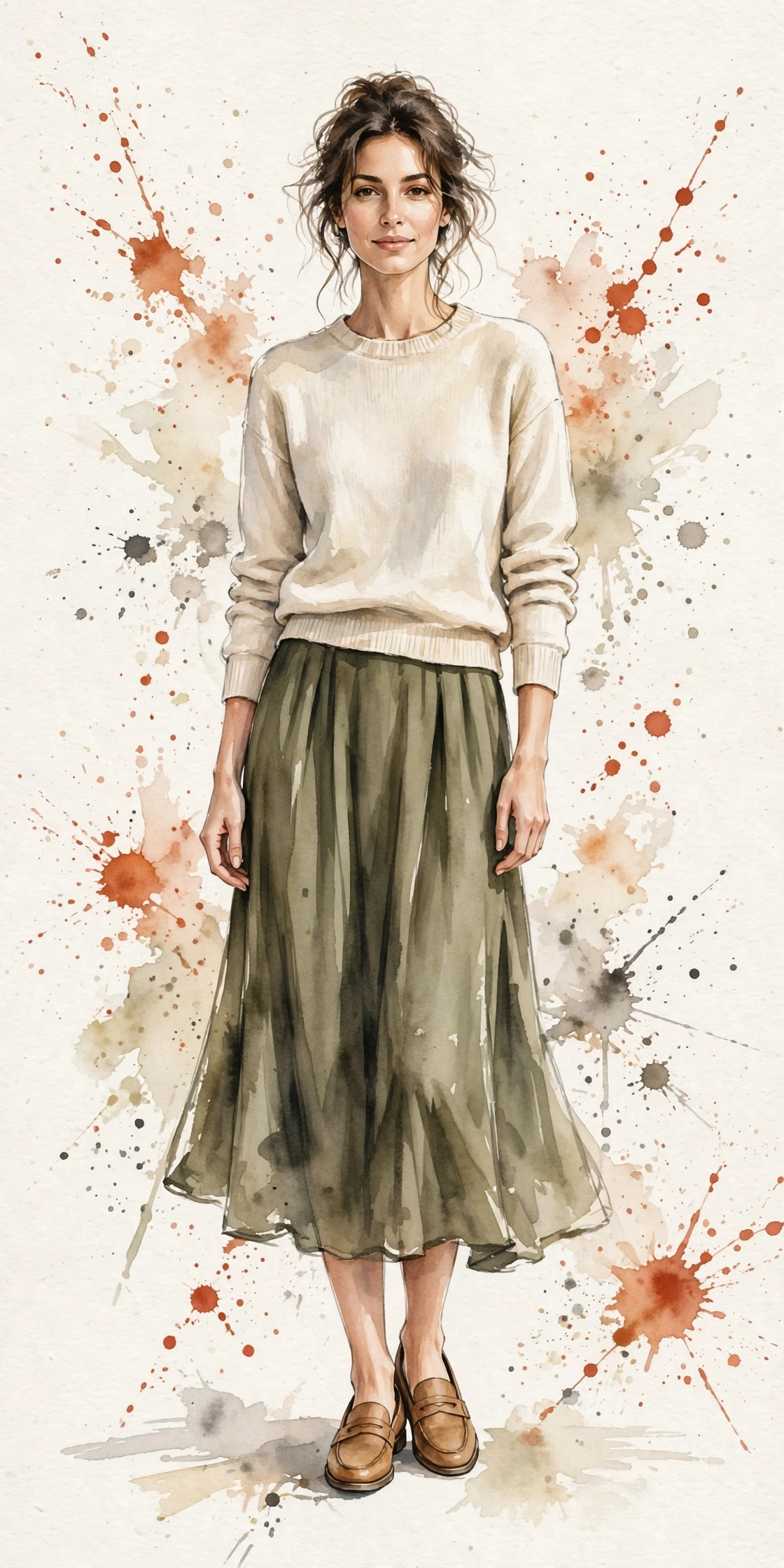
The lever — accessories. Dial up: swap loafers for heeled mules, add statement earrings and a clutch. The skirt’s fluidity does the rest. Dial down: swap loafers for clean minimal sneakers, drop the earrings. The knit keeps it soft; nothing here is trying too hard.
Why it works: The base is genuinely comfortable — this is the formula for events where you’ll be on your feet, or where you suspect the dress code is softer than stated. The accessories carry all the adjustability, and they all fit in a small bag.
Does not cover: anything above cocktail-adjacent (the knit caps the ceiling), or occasions where sneakers would read as a statement rather than a choice.
How to choose your formula
Pick by the direction of your uncertainty:
Worried about overdressing? Start at Formula 3’s base and dial up only if needed. It’s easier to add formality than to remove it gracefully.
Worried about underdressing? Start at Formula 2’s base. The blazer gives you the highest starting register, and removing it is always available.
Genuinely no idea? Formula 1. The column dress commits to nothing, and the shoe swap is the fastest lever of the three.
And one practical rule for all three: bring the lever with you. The alternate shoes, the earrings, the decision about the blazer — packed, not hypothetical. A lever you left at home is just a guess with extra steps.
The point
You’ll never decode “dressy casual” — it means something different to every host, and half of them don’t know what they meant either. Stop trying to. Build the outfit around the adjustment, arrive, read the room in thirty seconds, and move the dial. The most overdressed person in the room is the one who guessed wrong; the best-dressed is the one who didn’t have to guess at all.



[…] stare at an invitation in confusion again. (For the general skill of dressing to unclear codes, our ambiguous-formality guide is the companion […]
[…] is the same lever as our ambiguous-formality guide — layers as adjustable formality — applied to temperature. And if the base layer is doing this […]