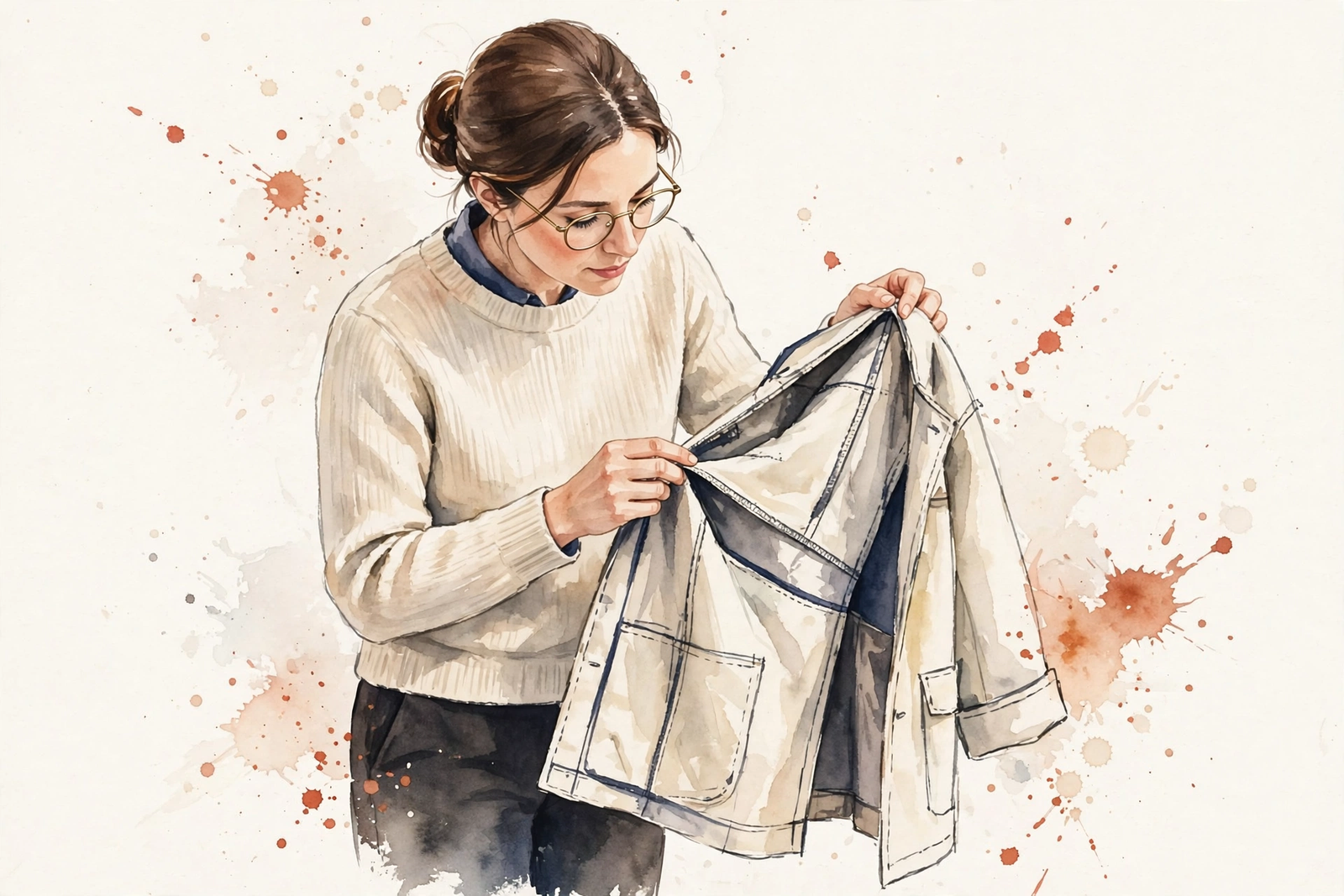
She holds up the blouse. It looks fine. It feels fine. But is it well made? The honest answer is that sixty seconds can't tell you everything — no quick check can promise durability. But it can tell you a surprising amount about construction, which is the part of quality you can actually see. Here's the check, and its limits stated plainly.
The 60-second check
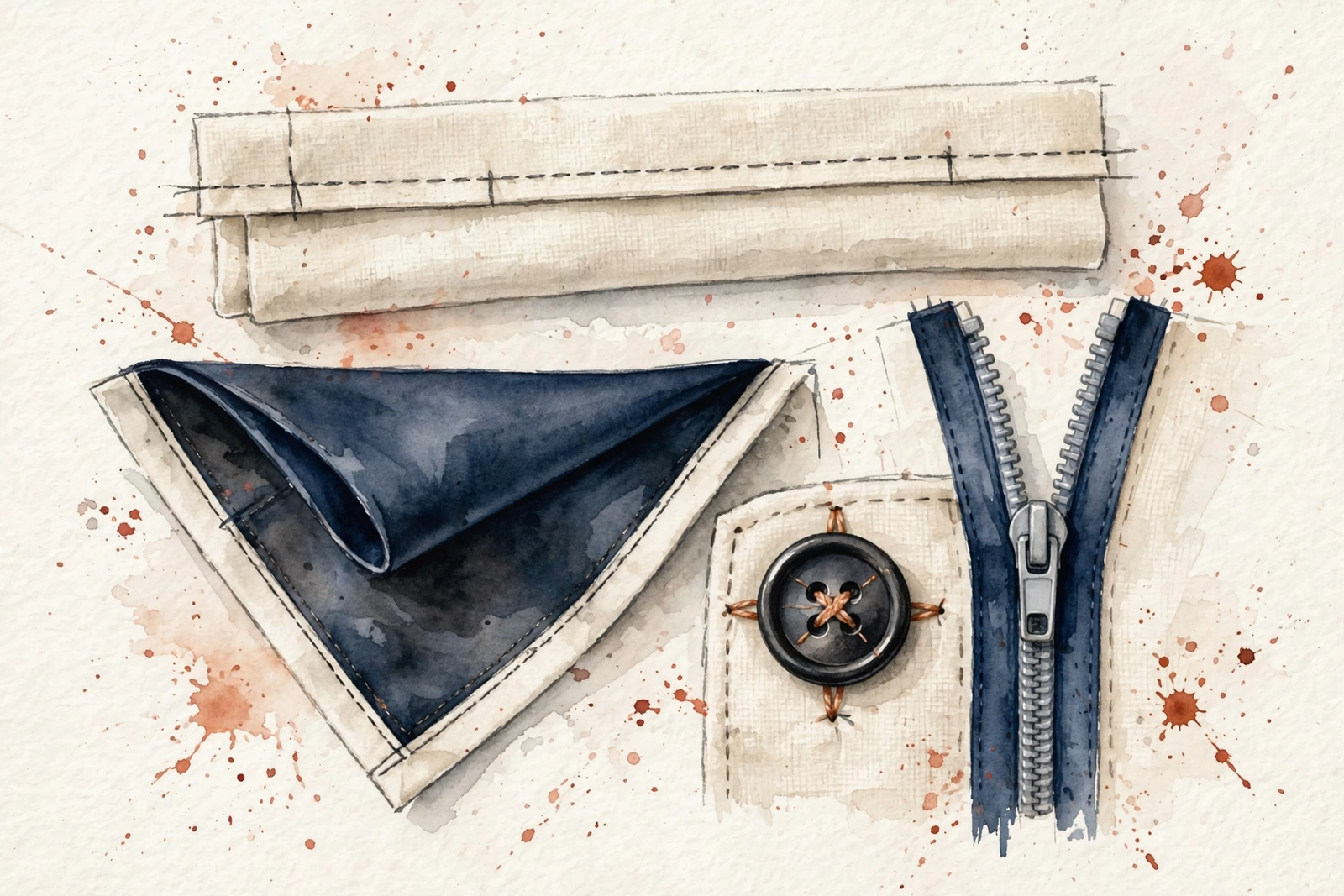
Seams (15 seconds). Turn it inside out or peek inside. Straight seams with no puckering or wavering. At stress points — underarms, pockets, waistband — look for reinforced stitching or bar tacks. Loose threads at a seam aren't a dealbreaker alone, but several of them suggest rushed work.
Lining (10 seconds). Is it lined where it should be? Jackets, structured dresses, and wool trousers should be. The lining should be cleanly attached, not bubbling or pulling. An unlined blazer at a lined-blazer price is information.
Hems and edges (10 seconds). Hems should be even and finished — not raw, not curling, not visibly uneven. Check the bottom of the garment and the sleeve ends.
Buttons, zippers, hardware (15 seconds). Buttons sewn on firmly (give one a gentle tug), with a spare included for better pieces. Zippers should run smooth in both directions without catching. Cheap hardware is often the first thing to fail.
Fabric hand-feel (10 seconds). Scrunch a hidden corner and release — does it spring back or stay wrinkled? Hold it to the light — can you see through what shouldn't be sheer? Dense, resilient fabric is a good sign. This is a clue, not a verdict.
What the check cannot tell you
This is the part most "spot quality instantly" guides skip. Be honest about it:
| The check reveals | The check cannot reveal |
|---|---|
| How carefully it was sewn | Fiber durability over years |
| Whether the hardware works today | Whether the zipper fails in year two |
| How the fabric feels new | Long-term shrinkage or stretching |
| Whether it's lined and finished | Colorfastness after twenty washes |
| Visible craftsmanship | How it wears with real use |
Fiber durability, shrinkage, and colorfastness are invisible at purchase. No inspection, however expert, can establish them in a store. They depend on fiber content, dye processes, and construction choices you can't see. Anyone promising otherwise is selling confidence, not information.
How to use the check
The check is a filter, not a guarantee. A garment that fails it — puckered seams, catching zipper, no lining where there should be — is telling you the maker cut corners you can see, which suggests corners you can't. Walk away from those.
A garment that passes it has earned consideration, not trust. Pair the check with the other tools: our dress-comparison framework for construction rows, the coverage checklist for what listings hide, and reviews for how things actually wear over time. Construction you can see, durability you must research. Sixty seconds gets you the first half — and knowing the second half exists is the more valuable lesson.