The listing is designed to sell, not to disclose. A coverage checklist that inverts the listing — plus the honest list of what can’t be assessed remotely.
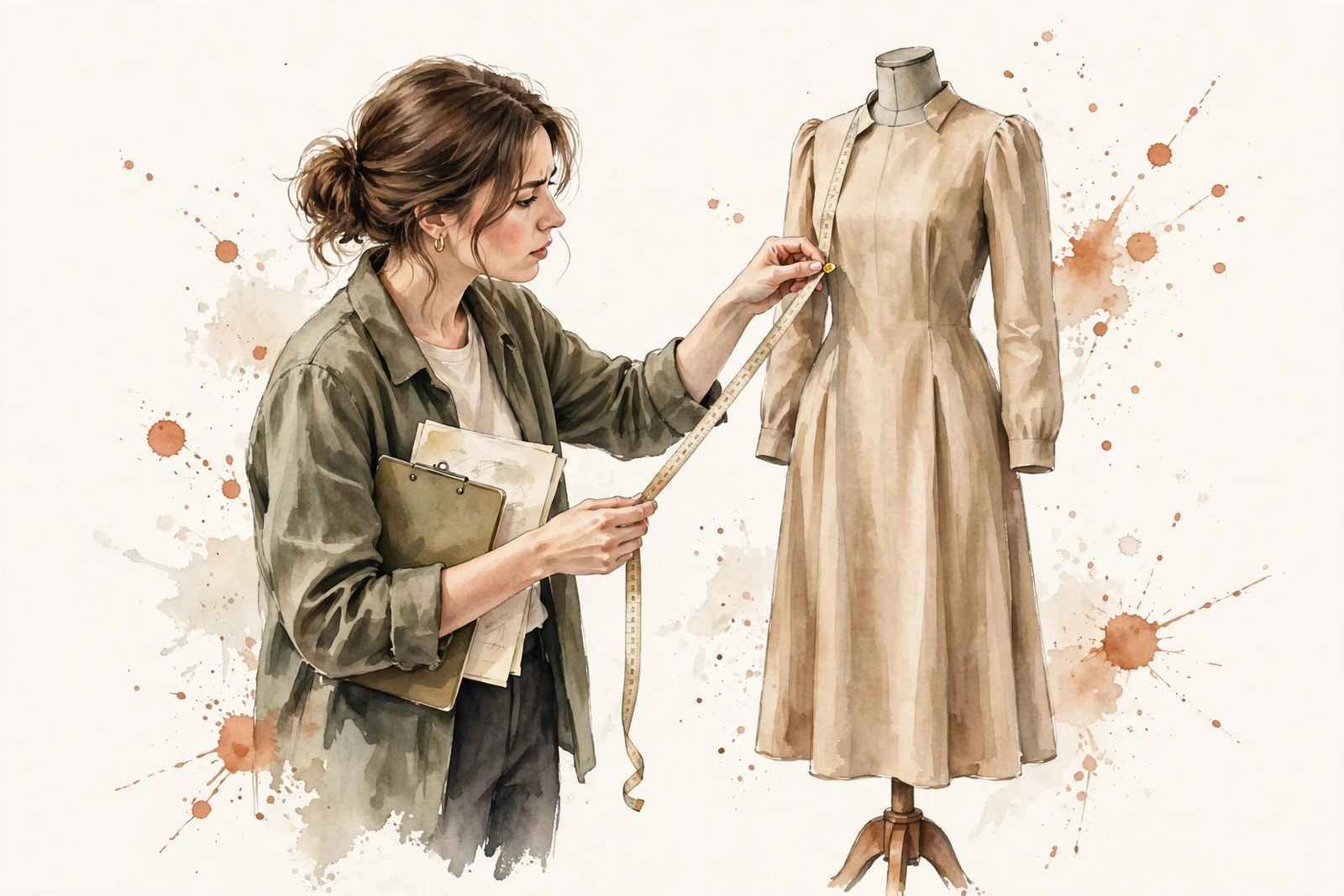
She’s been burned before. The dress looked fine in the photos — and then it arrived sheer in daylight, with a slit that climbed when she walked and a hem that rose every time she sat down. The return cost money, took two weeks, and left her exactly where she started: needing a dress with specific coverage and not trusting any listing to tell her the truth.
The listing isn’t lying, exactly. It’s just designed to sell, not to disclose. The photos show the dress at its best angle, in its best light, on a body that isn’t yours, standing perfectly still. Everything you need to know about coverage lives in the gaps — in what’s measured, what’s stated, and what’s missing. This checklist inverts the listing: instead of asking “does this look good,” it asks “what can I actually verify?”
One thing first: modesty here means whatever it means to you. This checklist covers measurable dimensions — lengths, depths, slits, opacity, lining — never a single standard. Your coverage requirements are yours to define; the checklist just makes sure the listing answers them before you pay.
The checklist: what to verify before buying
Work through these eight checks against the listing. Anything you can’t verify goes in the “unknown” column — and an unknown on a non-negotiable is a reason to skip, not a reason to hope.
| Check | What to verify | Where to find it |
|---|---|---|
| 1 · Measurements | Actual garment measurements (length, bust, waist) — compare against a dress you own. | Size/specs section. No measurements = the listing doesn’t want you doing math. |
| 2 · Neckline | Depth — stated, or judgeable from a straight-on photo. | Specs; straight-on product shot. Angled photos hide depth. |
| 3 · Sleeves | Length as a number or clear photo — not a category word. | Specs; photos. “Short sleeve” covers cap through elbow. |
| 4 · Slits & vents | Placement and height of every slit, vent, or wrap opening. | Specs; side and back photos. Missing angles = unanswered. |
| 5 · Fabric & opacity | Fiber content, lining, color. Customer photos in natural daylight. | Fiber line; details; reviews. Unlined + light + silent = assume a layer needed. |
| 6 · Model info | Model’s height and the size worn — recalibrate every length claim. | Model details. Neither given = add uncertainty to all proportions. |
| 7 · Lining | Full, partial, or unlined — a genuine coverage signal. | Details section. Silence = unlined. |
| 8 · Hem in motion | What the silhouette implies when you walk and sit. | Inferred from shape. Full skirts swing; fitted hems stay but may ride. |
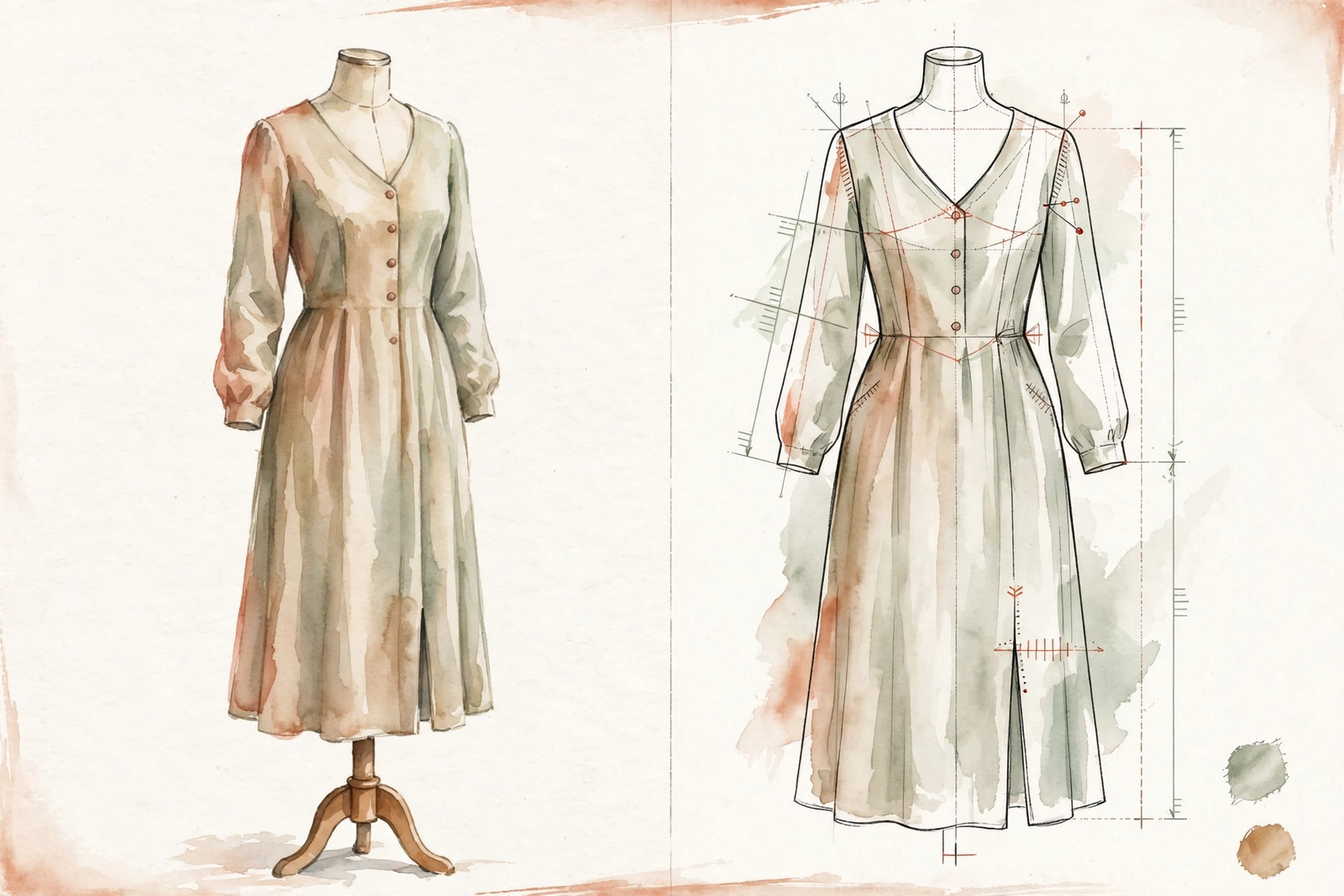
Garment measurements — and whose body they’re for. Does the listing give actual garment measurements (length, bust, waist), or only the model’s size? Measurements beat size labels every time: pull out a dress you own that gives you the coverage you want, measure it, and compare. No measurements at all is the listing telling you it doesn’t want you to do math. Treat that as information.
Neckline depth. Is the neckline depth stated, or can you judge it from the photos? Look for a straight-on product shot — angled “lifestyle” photos hide depth. If the model is posed to keep the neckline modest and no measurement is given, you can’t verify it. Unknown.
Sleeve length. Stated in the specs, or visible? “Short sleeve” covers a wide range — cap, elbow, and everything between. If your requirement is specific (say, elbow or longer), you need a number or a clear photo, not a category word.
Slit and vent placement. Check the specs and every photo angle for slits, vents, or wrap openings — and their height. A slit that starts at the knee behaves very differently from one that starts mid-thigh, and listings rarely volunteer the difference. Side and back photos matter here; if they don’t exist, the slit question is unanswered.
Fabric content and opacity clues. Read the fiber line, then read for opacity: is it lined? What color is it — dark prints forgive, light solids don’t. Customer photos in natural daylight are the only opacity evidence that counts; studio lighting flatters every fabric. Unlined + light-colored + no opacity note = assume you’ll need a layer underneath, and decide whether that’s acceptable before you buy.
Model height and the size worn. A dress photographed on a 5’10” model wearing a sample size tells you nothing about where the hem lands on you. Good listings state the model’s height and the size worn — use it to recalibrate every length claim. If the listing gives neither, mentally add uncertainty to every proportion in the photos.
Lining — full, partial, or unlined. Lining does quiet work for coverage: it adds opacity, weight, and structure. “Fully lined” stated in the specs is a genuine coverage signal. Silence on lining, as always, means unlined — and an unlined dress in a lightweight fabric is a coverage question mark until proven otherwise.
Hem behavior in motion. This one you mostly infer: an A-line or full skirt swings and rises when you walk and sit; a fitted pencil hem stays put but may ride up. The listing won’t tell you this — no listing does — so read the silhouette. If your coverage standard has no tolerance for a hem that moves, favor shapes that stay where they’re put, and treat every full skirt as a question the listing can’t answer.
What the listing cannot tell you
Honestly out of reach — no product page can establish these
- Fit in motion. No photo shows what the dress does when you walk, sit, bend, or reach. Coverage is a moving target; listings only show it standing still.
- True opacity. Studio lighting, linings that shift, fabrics that go sheer when stretched — daylight on your body is the only real test.
- How the neckline behaves. A neckline that’s modest standing can gape when you lean forward. No listing photographs this.
- How it sits on your body. Draping depends on your proportions, not the model’s. The same dress covers differently on different bodies — physics, not a flaw.
This box isn’t there to discourage you. It’s there so you know exactly what you’re gambling on when you buy — and can decide whether the gamble is worth it. A dress that passes all eight checklist items but fails on motion is still a risk; now it’s a priced risk, and you get to choose whether to take it.
The decision rule
Here’s the whole checklist compressed into one rule: if a non-negotiable can’t be verified, skip — don’t gamble.
“Non-negotiable” is doing the work in that sentence. Not every check matters equally to every reader. Identify yours before you shop: the two or three coverage dimensions that are deal-breakers for you. Then the checklist becomes simple — verify those, and let the rest be preferences. A dress that fails a preference is a compromise; a dress that fails a non-negotiable is a return. Returns are expensive, in money and in weeks.
And “don’t buy” is a complete, valid outcome. The checklist’s best result isn’t always a purchase — sometimes it’s the dress you didn’t order, the return you didn’t pay for, the two weeks you didn’t lose. That’s not the checklist failing. That’s the checklist working.
Shop like the listing is incomplete — because it is
Listings are designed to sell, not to disclose. Once you read them that way — checking measurements against your own dresses, hunting for lining statements, treating silence as an answer — online shopping stops feeling like a gamble and starts feeling like research. The checklist doesn’t eliminate risk; the “cannot tell you” box is honest about that. But it moves the odds. And for coverage that matters to you, better odds are everything.