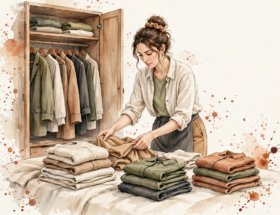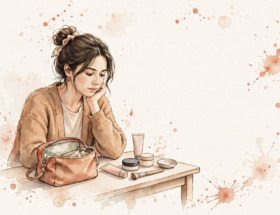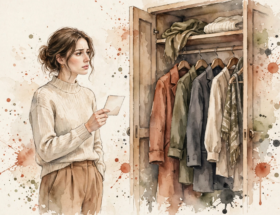
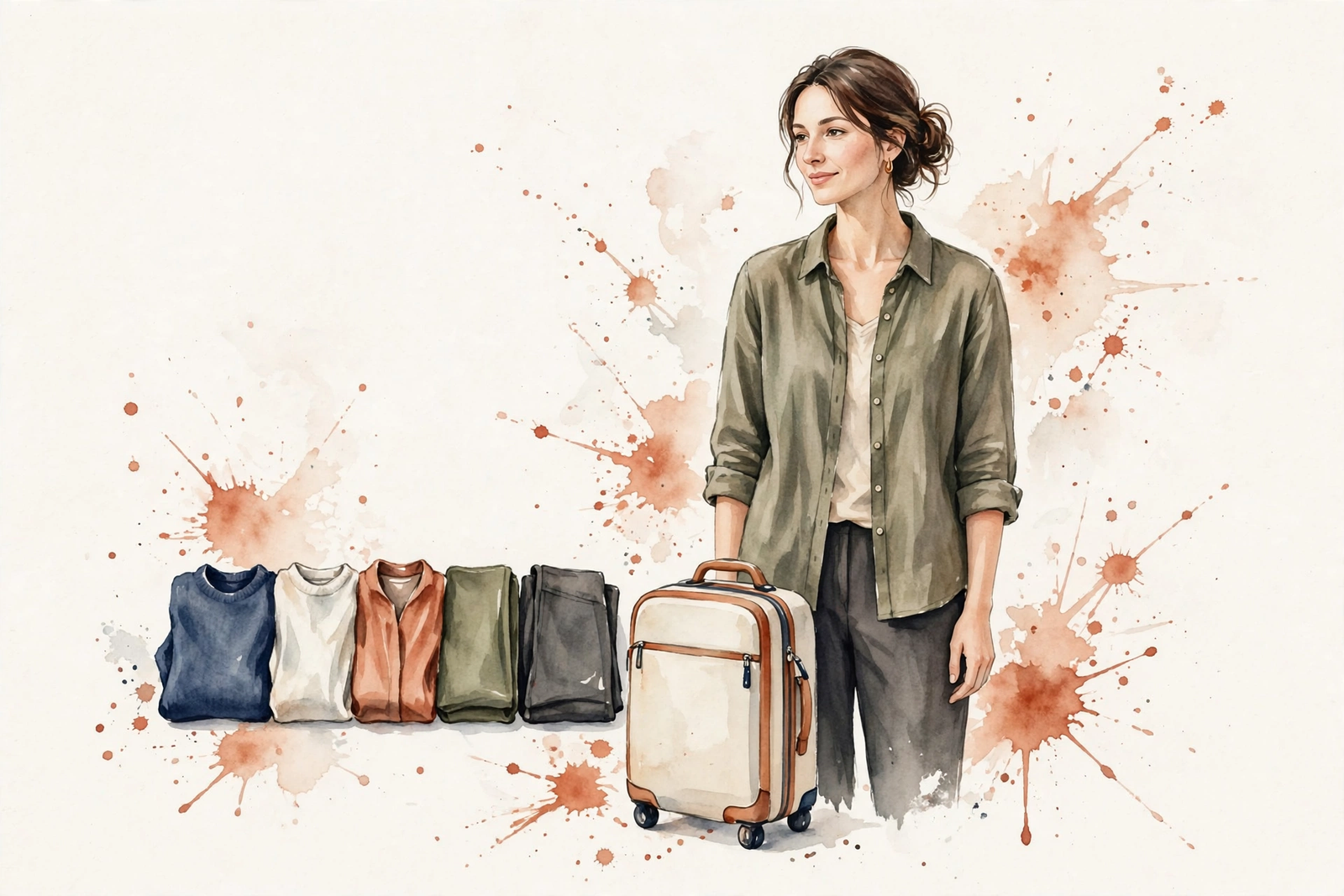
She packs for every version of herself. The "just in case" dress, the shoes for a dinner that isn't planned, the third jacket. The suitcase weighs twenty kilos, she wears half of it, and the trip is spent managing luggage instead of being somewhere.
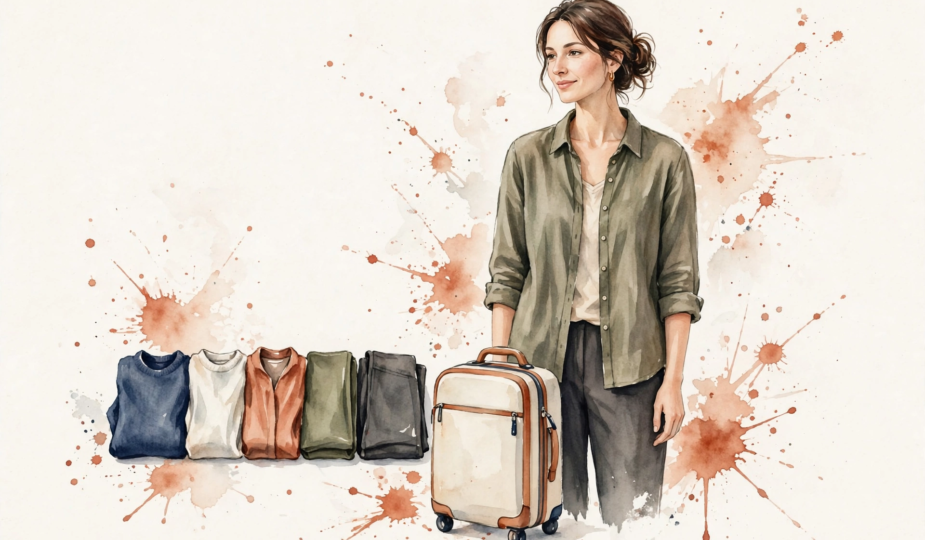
The fix isn't better packing cubes. It's fewer decisions. Five core clothing pieces can dress you for seven days — if they're the right five, in the right colors, with an explicit rule about what counts. Here's the framework.
The rule, stated first
Five core clothing pieces. That's tops, bottoms, and dresses — the visible outfit. Everything else sits outside the count: shoes (two pairs max), underwear and sleepwear, one outerwear layer, accessories. This isn't cheating; it's the only way the framework stays honest. A "5-piece wardrobe" that secretly includes boots, a coat, and six scarves is just a regular suitcase with better marketing. The five are the engine; the rest is the chassis.
The five
Pick from your own closet using your uniform (if you did the capsule audit, you already know your palette). A template that works for most trips:
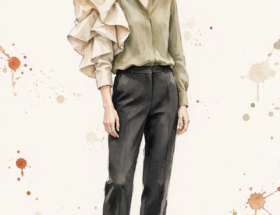
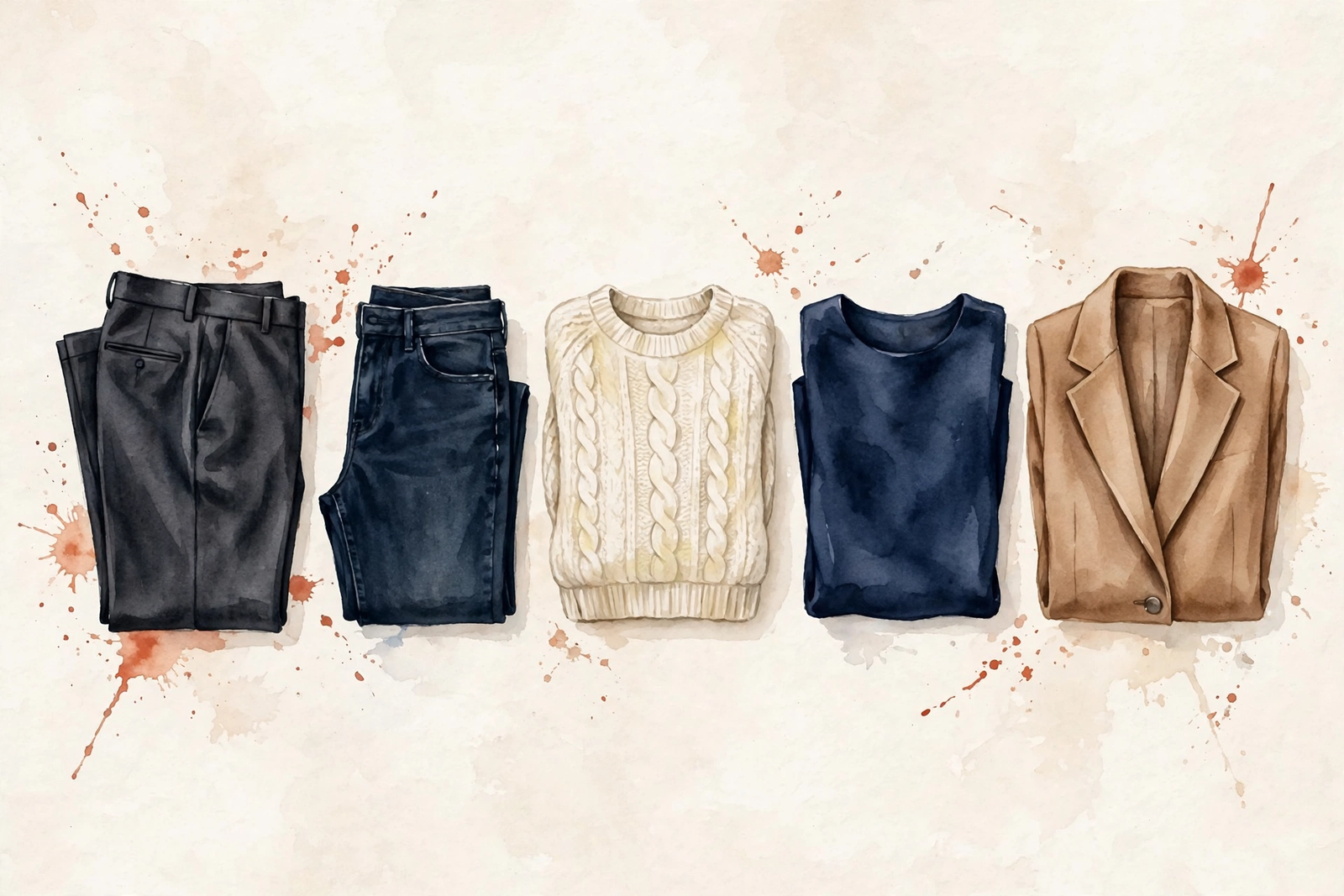
- Dark tailored trousers — the anchor. Dresses up, dresses down, hides travel wear.
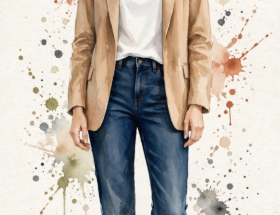
- Dark jeans — the casual anchor. Second bottom so neither gets worn out.
- Cream knit — the light top. Works under a blazer, alone, layered.
- Navy top (knit or shirt) — the dark top. Pairs with both bottoms.
- The flexible fifth — a blazer if the trip skews formal, a midi dress if it skews warm, a third top if it skews casual. This is the only piece you choose per trip.
The 3-color rule
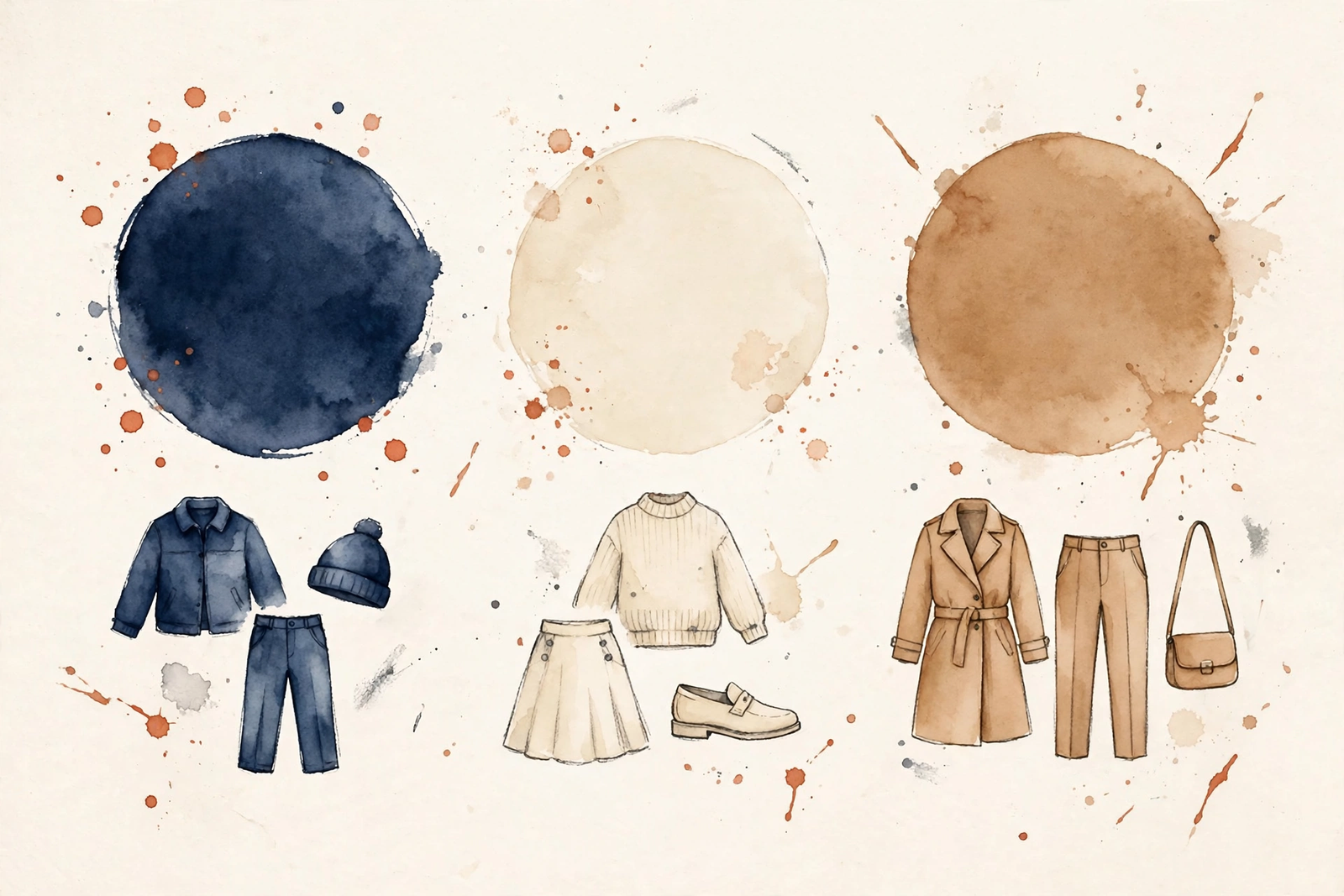
All five pieces must live within three colors — say navy, cream, and olive, or black, white, and camel. If every piece matches every other piece, you can't pack a wrong combination. This is the whole secret. Most packing failures aren't about quantity; they're about orphans — the beautiful top that matches nothing else in the bag.
The matrix: seven days
| Day | Outfit | Notes |
|---|---|---|
| 1 (travel) | Jeans + navy top + outerwear | Wear the bulkiest pieces on the plane |
| 2 | Trousers + cream knit | |
| 3 | Jeans + cream knit | Knit gets its second wear |
| 4 | Trousers + navy top | |
| 5 | Fifth piece (dress) or jeans + navy top | Dress day if you packed it |
| 6 | Trousers + cream knit | Third wear — knits forgive |
| 7 (travel) | Jeans + navy top + outerwear | Same as day 1; nobody noticed |
Seven days, five pieces, zero repeats anyone would catch. Tops can repeat after airing; bottoms go 2–3 wears. Plan one laundry stop (or a sink wash midweek for knits) and the math gets even easier.
Outside the five
- Shoes: two pairs — the comfortable walking pair and the dressier pair. Wear the bulkier on the plane.
- Outerwear: one coat or jacket, worn in transit, never packed.
- Underwear/sleepwear: pack for the trip length; they weigh nothing.
- Accessories: a scarf that doubles as a wrap, minimal jewelry. These change outfits without changing pieces.
What the framework gives you
A carry-on you can lift, outfits you don't think about, and no "just in case" dead weight. The five pieces do the work because the 3-color rule made every combination safe before you left home. Travel is the ultimate capsule test — and the same editing logic applies when you get back.