Her products live everywhere: the counter, the shower ledge, a bag on the floor, three more in a drawer she avoids opening. Every morning is a small excavation. She doesn't need a bigger bathroom. She needs zones.
Here's the principle: organization is zoning, not buying organizers. A dozen new containers in a chaotic system just gives you organized chaos. Three zones — defined by how often you reach for things — turn any bathroom, however small, into a working routine space.
The three zones
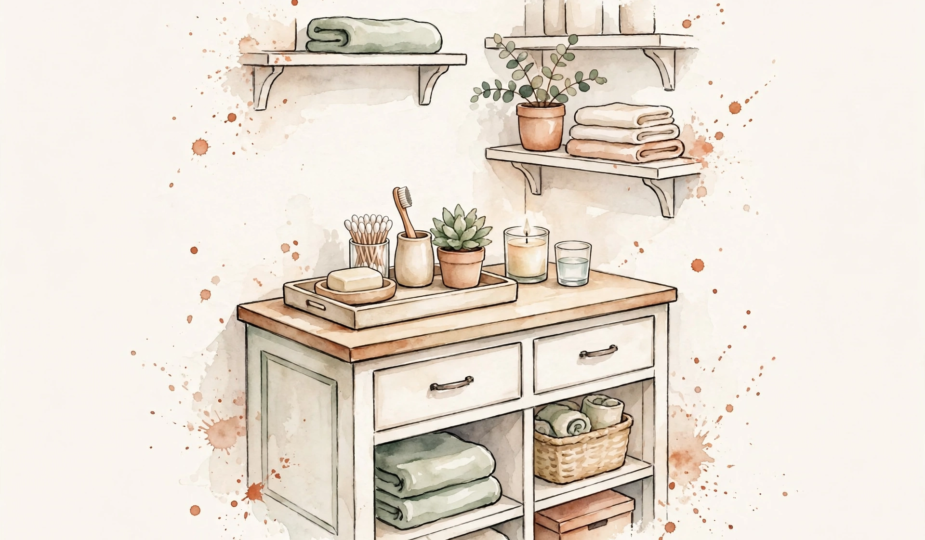
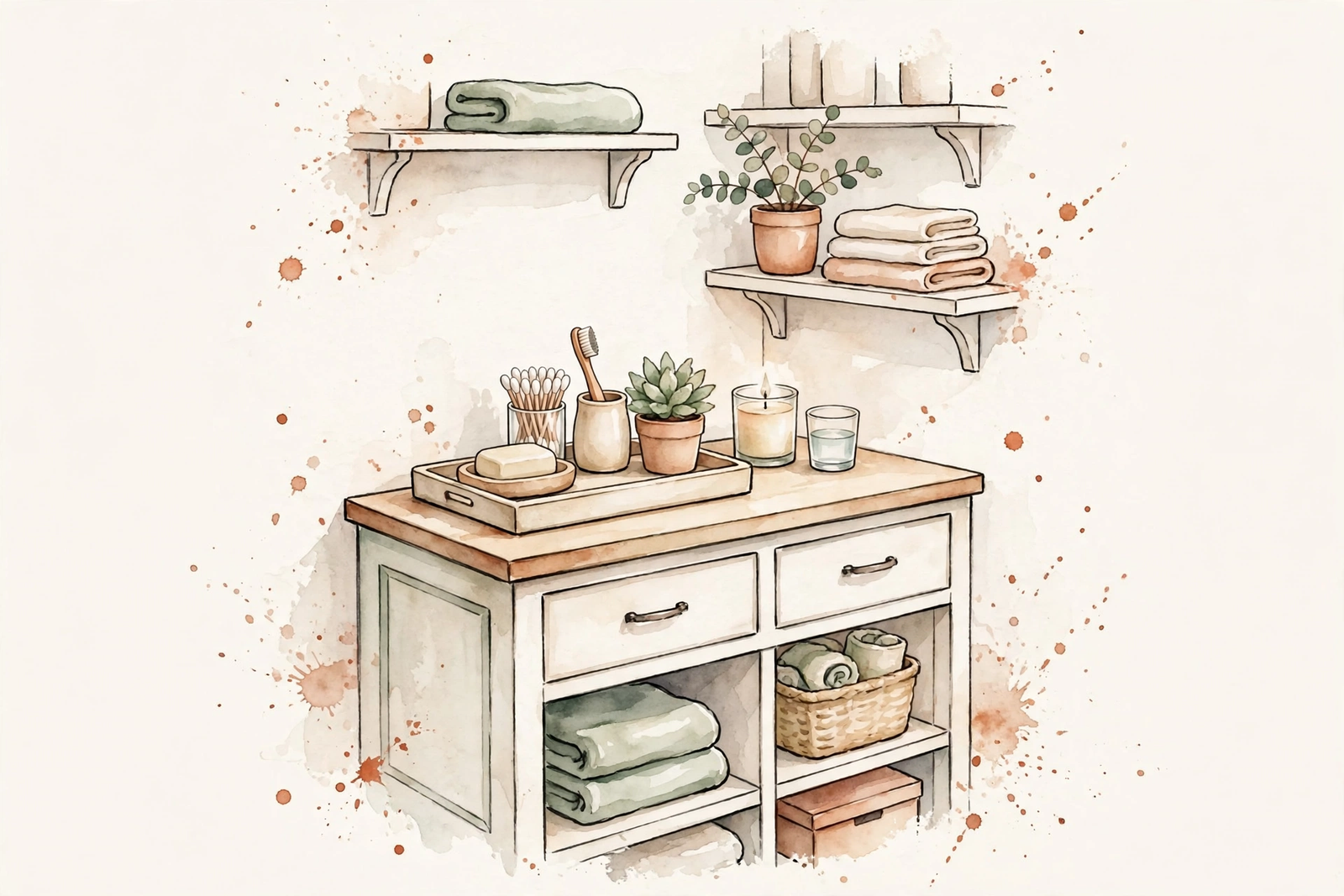
Zone 1: Daily — within arm's reach. This is the 10-minute face kit plus your daily skincare: the 6–8 things you touch every morning. They live on the counter or the top drawer — one tray, everything visible, nothing stacked. If it doesn't fit on one tray, something in Zone 1 belongs in Zone 2.
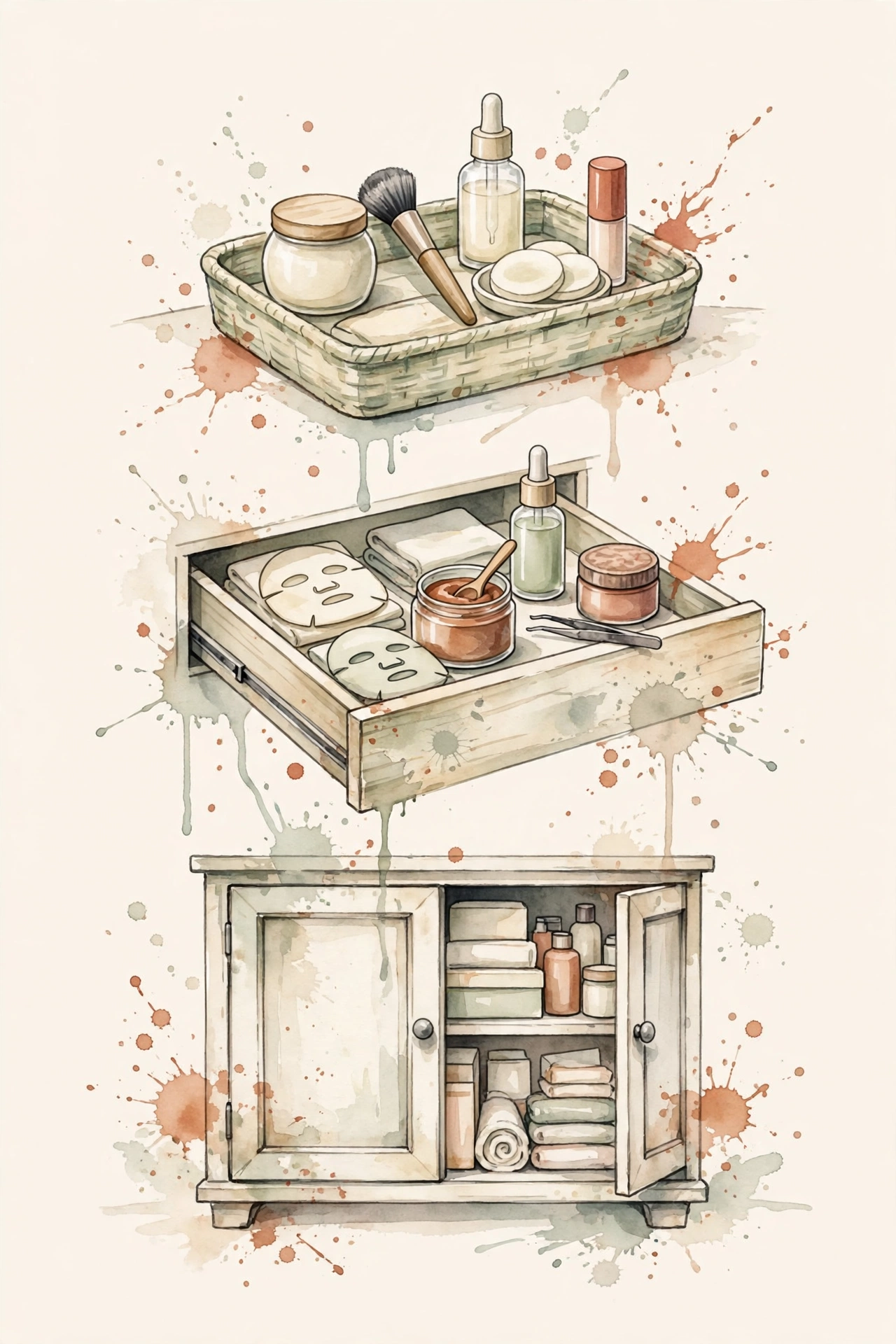
Zone 2: Weekly — nearby but not prime. Masks, exfoliants, the special-occasion makeup, nail care. A drawer, a shelf, or a basket under the sink. You visit weekly, so "nearby" is enough — it doesn't need counter space.
Zone 3: Storage — elsewhere. Backups, empties waiting to be replaced, seasonal items, the things you keep "just in case." A closet, a cabinet, anywhere out of the bathroom if space is truly tight. Zone 3 is allowed to be imperfect — it's storage, not display.
| Zone | Frequency | Lives | Rule |
|---|---|---|---|
| 1 — Daily | Every morning | One tray, counter or top drawer | If it doesn't fit, demote something |
| 2 — Weekly | Weekly | Drawer, shelf, under-sink basket | Nearby, not prime |
| 3 — Storage | Rarely | Closet or cabinet | Out of the bathroom if needed |
Small-bathroom specifics
Small bathrooms punish horizontal thinking. Go vertical: a narrow shelf above the toilet, a magnetic strip inside a cabinet door for tweezers and clippers, hooks on the door back for the hairdryer. Drawer dividers — even cut-up boxes — beat one deep drawer where everything migrates to the bottom. And decant nothing: the original packaging tells you what it is and when it expires.
The one-in-one-out rule
Zones collapse without maintenance. The rule: every new product that enters Zone 1 must push one out — finished, expired, or demoted to Zone 2. This isn't minimalism; it's physics. Zone 1 has fixed capacity. Respecting that is what keeps the morning excavation from returning.
It also disciplines buying. When the makeup bag is built around your actual life, and Zone 1 holds exactly that kit, a new purchase has to answer a real question: what does this replace? "Nothing, I just want it" is a fine answer — as long as you're honest that it's entering Zone 3, not Zone 1.
What zoning gives you
The morning stops being an excavation. Everything you need is on one tray; everything else is where it belongs. The bathroom didn't get bigger. It got a system — and systems, unlike square footage, are free.