
She dresses for the twenty-minute walk in the cold. Then she arrives — the overheated office, the warm restaurant, the stuffy train — and spends the day slowly cooking inside her own outfit. Peeling off the sweater leaves her in something she wouldn't have chosen to be seen in.
The problem isn't the weather. It's the system. Layering isn't wearing more clothes — it's wearing removable ones. Three layers, each with a job, in a strict peel order. Here's the formula.

The three layers
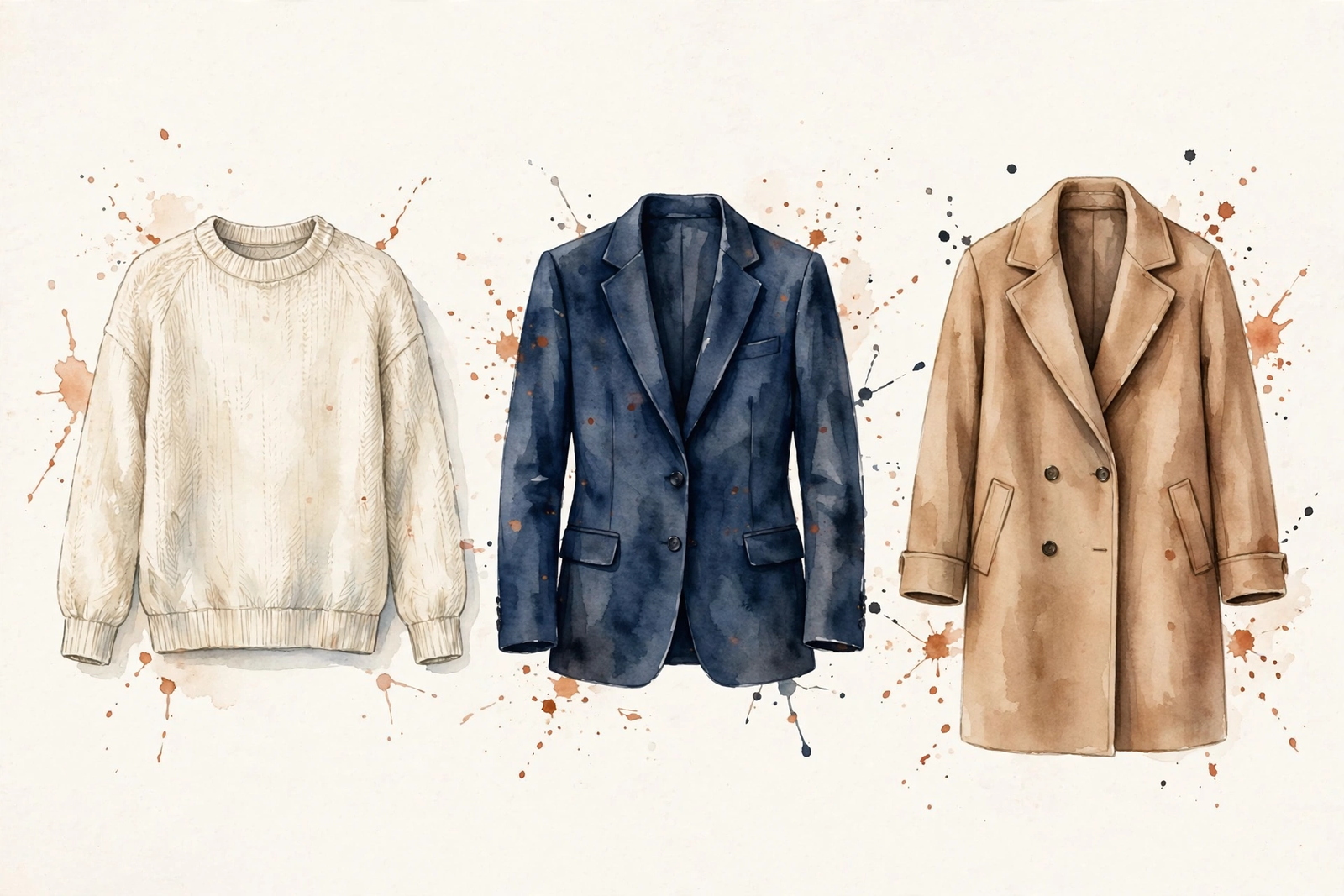
Base: light and fitted. The layer that stays on all day — a fine knit, a shirt, a thin turtleneck. It must look complete on its own, because indoors it is the outfit. This is the rule most layering gets wrong: if the base can't stand alone, the system collapses the moment you warm up.
Mid: warmth and texture. The insulating layer — a cardigan, a blazer, a vest, a chunky knit. This is where the outfit's personality lives: texture, color, structure. It comes off when the room warms up and goes back on for the walk home.
Shell: weather and polish. The outermost layer — coat, structured jacket, heavy overshirt. Its jobs are wind, rain, and first impressions. It should never be needed indoors; if you're keeping your coat on inside, the mid layer isn't doing its job.
| Layer | Job | Must look good… | Example |
|---|---|---|---|
| Base | All-day foundation | Alone, indoors | Fine knit, shirt, thin turtleneck |
| Mid | Warmth + personality | With base, without shell | Cardigan, blazer, vest |
| Shell | Weather + polish | From the street | Coat, structured jacket |
The peel order
Outdoor cold → heated indoors, the sequence is fixed:
- Shell off first, at the door. It did its weather job; hang it up.
- Mid off second, when the room warms you. The base is a complete outfit — that's the whole point.
- Base stays. All day, in every room.
Reverse it leaving: mid on at the door, shell on outside. The system runs both directions.

The transitions that break people
The office: shell off at your desk immediately — don't "wait to warm up." The mid layer is your working outfit; the base is your meeting outfit if the room runs hot.
The restaurant: mid off when seated if it's warm. A base that looks intentional means you're never the person in a sad undershirt.
The car / train: shell off before you sit — coats bunch, overheat, and wrinkle. The mid layer handles transit; the shell is for the street.
This is the same lever as our ambiguous-formality guide — layers as adjustable formality — applied to temperature. And if the base layer is doing this much work, it belongs in your capsule: the hardest-working pieces you own.
What the formula gives you
Comfort in every room without a costume change. The base earns its place by looking complete alone; the mid earns its place by adding warmth and character; the shell earns its place outside. Three layers, each removable, each with a job — and no more melting through the afternoon in an outfit built for the morning walk.