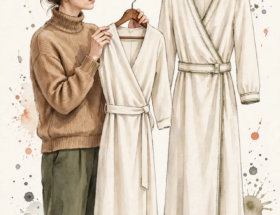
Her closet is full and she has nothing to wear. So she does what the internet suggests: she shops for a capsule wardrobe — a crisp list of thirty-something perfect pieces, most of which she doesn't own, in colors she may not even like. Three hundred dollars later the closet is fuller and the problem is identical.
The mistake is treating the capsule as a shopping list. It's not. A capsule wardrobe is an editing method. The wardrobe you want is already in your closet, buried under the pieces that don't work. This is the audit that digs it out — three piles, one honest look at what remains, and a gap list so short you'll wonder why you ever thought you needed to start over.

Step 1: The audit — three piles
Take everything out. Yes, everything — the audit doesn't work on a half-empty closet because the pieces you're avoiding are usually the ones making the decisions. Then sort every item into exactly three piles:
Keep. Wears well, fits right now, in colors you actually reach for. Be strict: "fits right now" means today, not after five pounds or a tailor you won't visit. This pile is your capsule's foundation — it should feel like relief.
Tailor. Good bones, wrong fit. The blazer that's perfect except for the sleeves, the trousers that need hemming, the dress that gapes at the neckline. Rule: only pile it here if you'll take it to the tailor this month. A tailor pile that sits for a year is a donate pile with extra steps.
Donate or sell. Everything else — including the wardrobe fillers. (If you haven't read it, our piece on the difference between a wardrobe basic and a wardrobe filler is the companion to this audit: fillers are the pieces that take up space without doing a job.) The aspirational sizes, the "someday" occasion pieces, the duplicates of something better. Let them go.
Step 2: Find your uniform
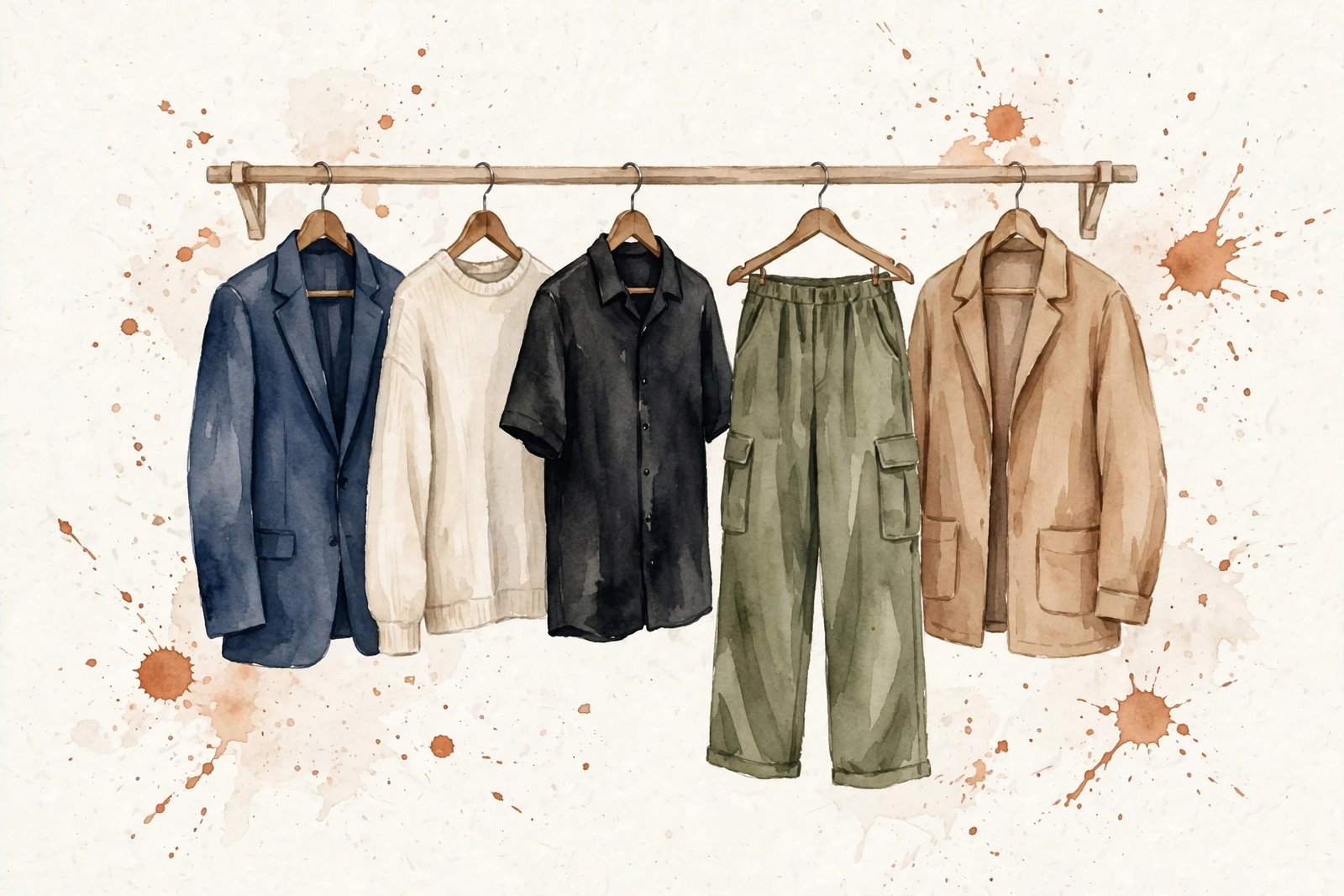
Now look at the Keep pile — not item by item, but as a whole. What do the pieces have in common? You'll usually see a pattern emerge within minutes: a color palette you default to (navy, cream, black, olive), silhouettes you repeat (straight trousers, knit tops, midi skirts), a formality level where you live.
That's your uniform — not a boring sameness, but the DNA of what you actually wear. The capsule isn't built around an aesthetic you admire; it's built around the pattern you already live in. This is why bought-from-scratch capsules fail: they impose someone else's palette on your life. Yours is already telling you what it wants.
Write the pattern down: 3–4 core colors, 2–3 silhouettes, your formality home base. This becomes the filter for everything that follows.
Step 3: The gap list — buy only what's missing
With the Keep pile hung back up, the gaps announce themselves. The blazer with nothing underneath it. The trousers waiting for the right shoe. The missing middle layer between your lightest and heaviest pieces. Write each gap as a specific need — not "a top" but "a cream knit that works under the navy blazer."
This list is your entire shopping permission slip. Most audits produce three to six gaps — that's it. Buy those, slowly, against your uniform filter (does it match the palette? the silhouette? the formality?), and stop. The capsule is complete when every piece works with nearly every other piece — not when you hit a number.
A note on numbers: capsule guides love prescribing 33 or 37 pieces. Ignore the numerology. Most people land somewhere around 30–40 pieces excluding underwear, sleepwear, and workout gear — but your number is whatever makes every morning easy. If you can see everything you own at once and get dressed in five minutes, you have a capsule wardrobe regardless of the count.
What the capsule gives you
It's not minimalism as identity. It's just the math of a working wardrobe: fewer decisions, more combinations, nothing you avoid. The pieces you kept were already doing the work — they were just drowned out. The audit didn't build you a new wardrobe. It revealed the one you had.