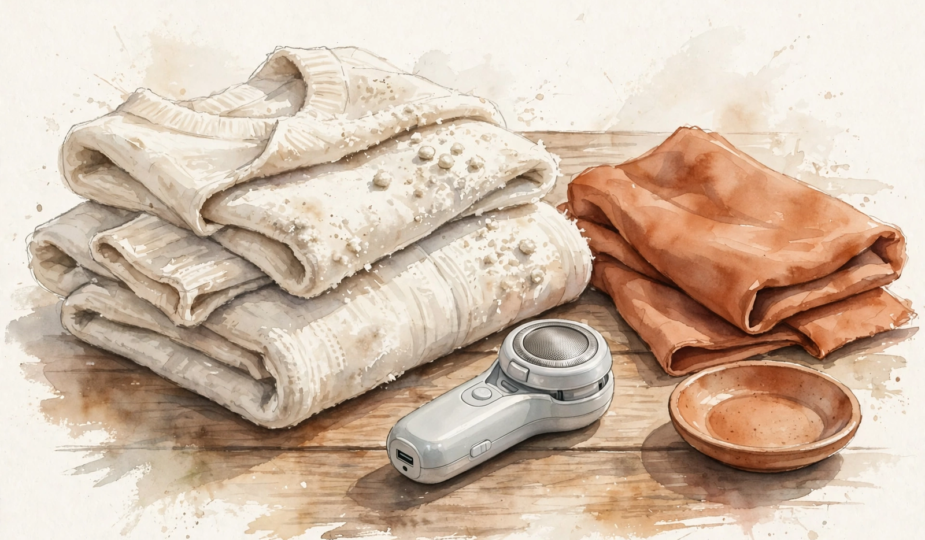
The sweater was fine when you bought it. A few wears later, the underarms and sides are dotted with small, stubborn balls, and it looks tired long before it should. Those balls are called pills, and the first thing worth knowing is what they are not: they are not dirt, they are not something that fell onto the sweater, and they are not, by themselves, proof that you bought badly.
A pill is the sweater’s own fiber, escaped. That single fact explains everything else — why pills form where they form, why some sweaters pill in a week and others never do, how to remove them without doing damage, and how to tell the difference between a sweater that is breaking in and one that is giving up. Here is the whole picture, in that order.
Why a sweater pills
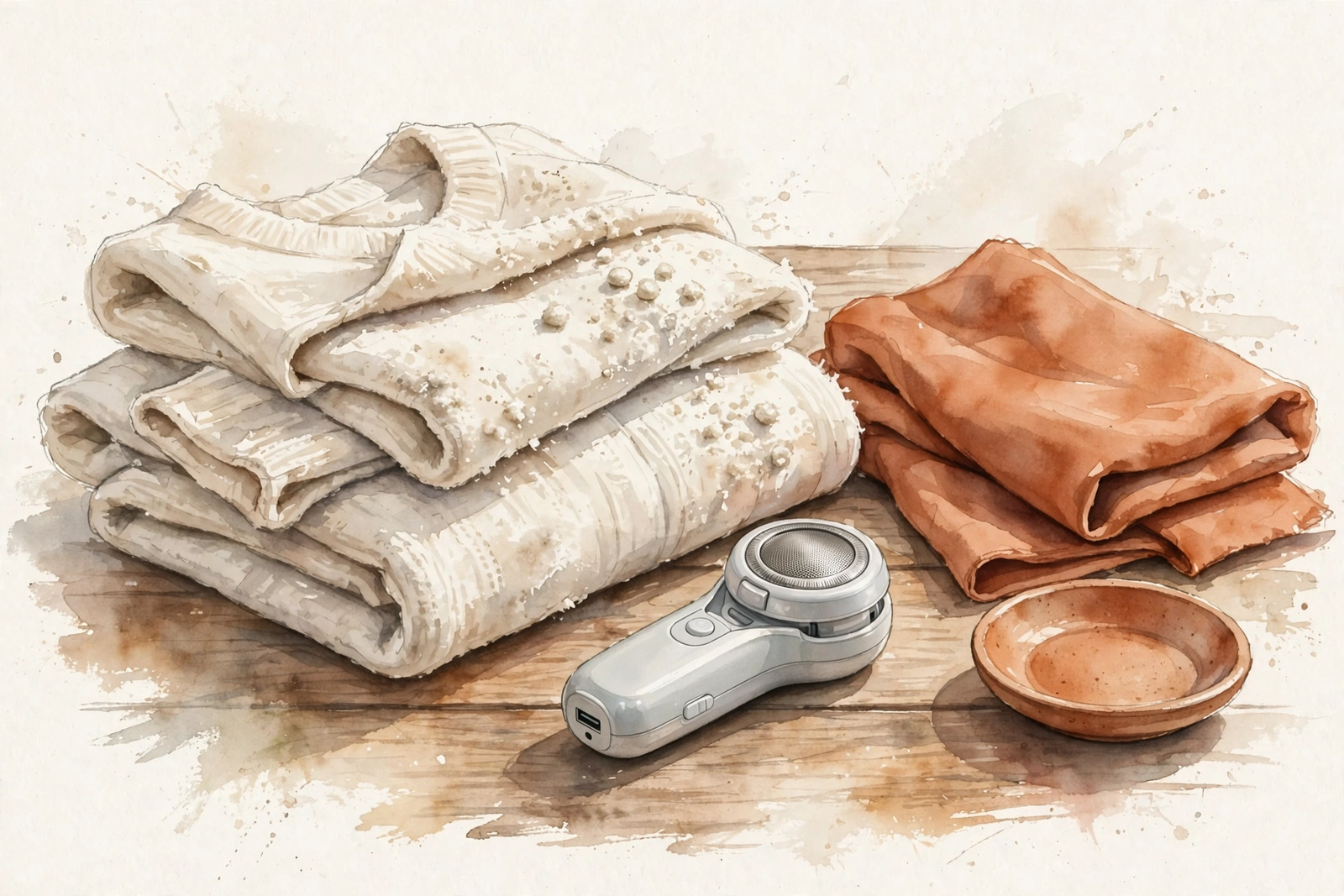
A knit is yarn, and yarn is thousands of individual fibers twisted together. Every time the surface rubs against something — skin, a coat lining, the side of a bag — friction works at those fibers. The loose ones, and especially the short ones, gradually migrate out of the yarn. Once free, they do not fall away. They tangle around each other and around the fibers still anchored in the knit, and the tangle is the pill: a small ball of your sweater, still attached to your sweater.
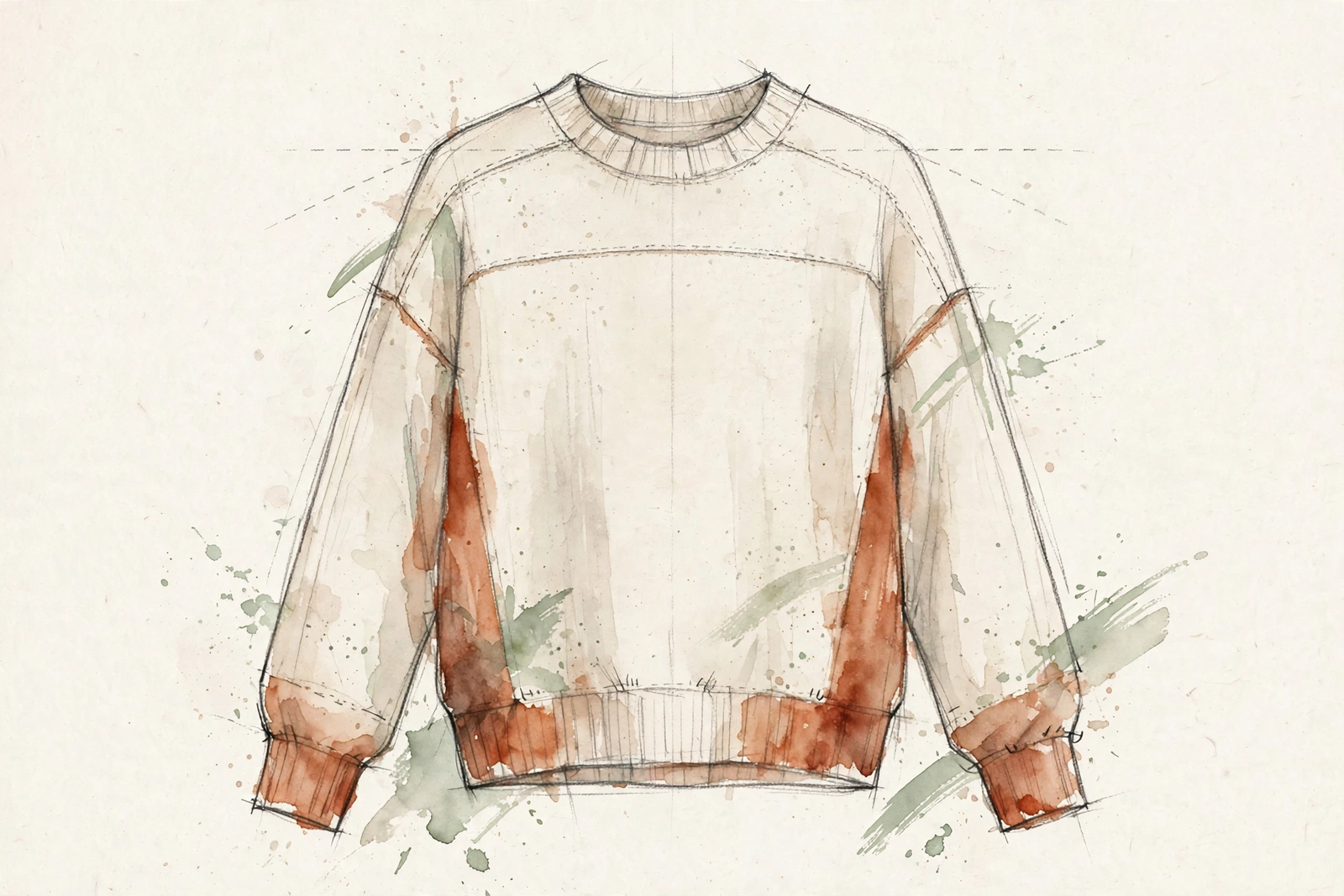
That mechanism predicts the map. Pills appear where friction lives: under the arms, along the sides of the torso, and anywhere a bag strap crosses the body day after day. If your sweater pills exactly there and nowhere else, that is geography, not a defect.
It also predicts which sweaters pill most. Yarn spun from shorter fibers gives friction more ends to work loose, so short-fiber knits pill first and fastest. Blends have their own twist: when a stronger synthetic fiber runs through the yarn, it can anchor a pill in place, holding the tangle fast instead of letting it wear away — which is why pills on some blended sweaters seem to persist no matter how often you clear them. At the other end of the scale, long-staple fibers such as silk and linen stay locked inside the yarn far longer, and pill noticeably less.
Remove them safely: match the tool to the knit
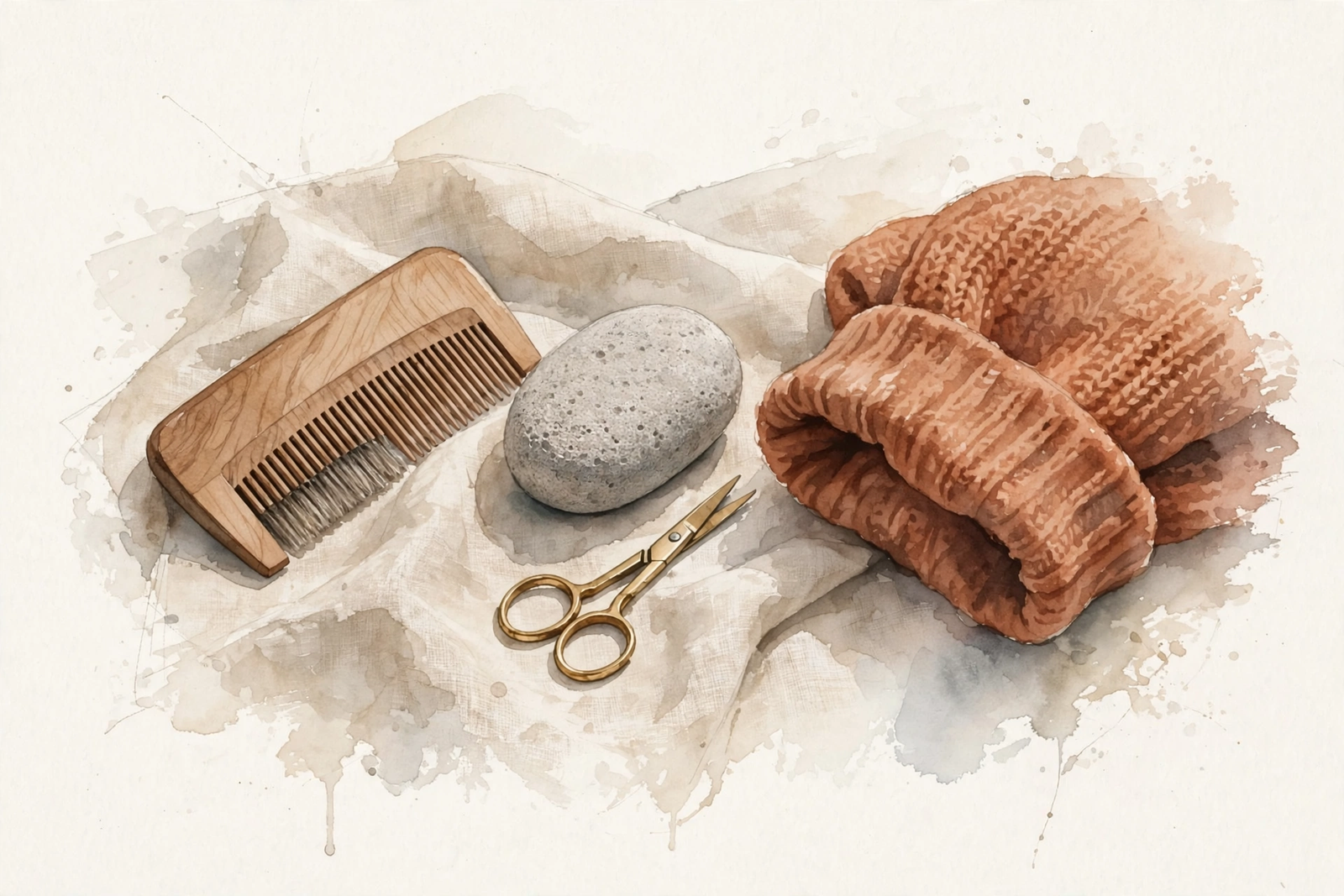
Removal is a cutting job, not a pulling job. The aim is to sever each pill from the fibers anchoring it while leaving the knit underneath untouched. Three tools do it, in safest-first order, and the right one depends on the sweater in front of you.
Electric fabric shaver — the default for most sweaters. Lay the garment flat on a hard surface, smooth it out, and glide the shaver lightly across the surface. Do not press, and do not linger in one spot; let the head do the work as it moves. This is the fastest of the three methods and the only one that handles a whole torso’s worth of pilling in a single sitting, which is why it is the right starting point for most everyday knits.
The shaver we would buy is the SINGER Fabric Shaver & Lint Remover, Powerful Portable Defuzzer with 3 Blades & Detachable Catcher — it covers a whole sweater in one sitting and is gentle enough for everyday knits when used with a light glide, as described above.
Disclosure: the link above is an affiliate link. If you buy through it, The Brands Souk may earn a commission at no extra cost to you. The recommendation comes first; the link is only there if you want it.
Sweater comb — for fine knits and small patches. Draw the comb across the fabric held taut, using light strokes in one direction. A comb is gentler and gives you finer control than a shaver, which makes it the better choice for delicate yarns and for small, localised patches — a single underarm, a strap line — rather than whole garments.
Sweater stone — chunky knits only. A pumice-style stone is the most abrasive option here, and it earns its place only on thick, heavy, chunky knits that can take it. Whatever the knit, test it on a hidden spot first — an inside seam allowance — before trusting it to a visible panel.
The one thing never to do. Do not pull pills off by hand. A pill is attached to fibers that are still part of the yarn; tearing it free drags those fibers out with it, loosens the knit, and works the next pill loose in advance. Pulling feels like tidying and behaves like damage. If you have no tool at all, do the slow version of the same cut: lift each pill gently away from the surface and snip its anchor threads with small scissors.
Stop the next round
You cannot repeal friction, but you can ration it. Prevention is mostly a matter of deciding where the rubbing happens and how much of it the face of the knit has to absorb.
Turn the sweater inside out before washing. The outside surface is the one that pills, because it is the one that rubs. Washed inside out, the garment takes the friction of the wash on its inner face instead, and the visible surface keeps its finish longer.
Use the gentle cycle, or hand-wash. Agitation is friction on a schedule. A gentle cycle — or a sink, for the sweaters you care most about — works far fewer fibers loose per wash than a standard cycle does.
Rest it between wears. A sweater worn two days running takes two days of underarm and strap friction with no pause. Rotating your knits spreads the same total wear across more garments and slows the clock on each one.
Watch the strap lines. If one shoulder or one side pills first, your bag is telling you where it rides. Carrying the bag in hand, or switching shoulders, will not eliminate friction — but moving it moves the wear, instead of concentrating it in the same band of knit every day.
When pilling is a verdict, not a nuisance
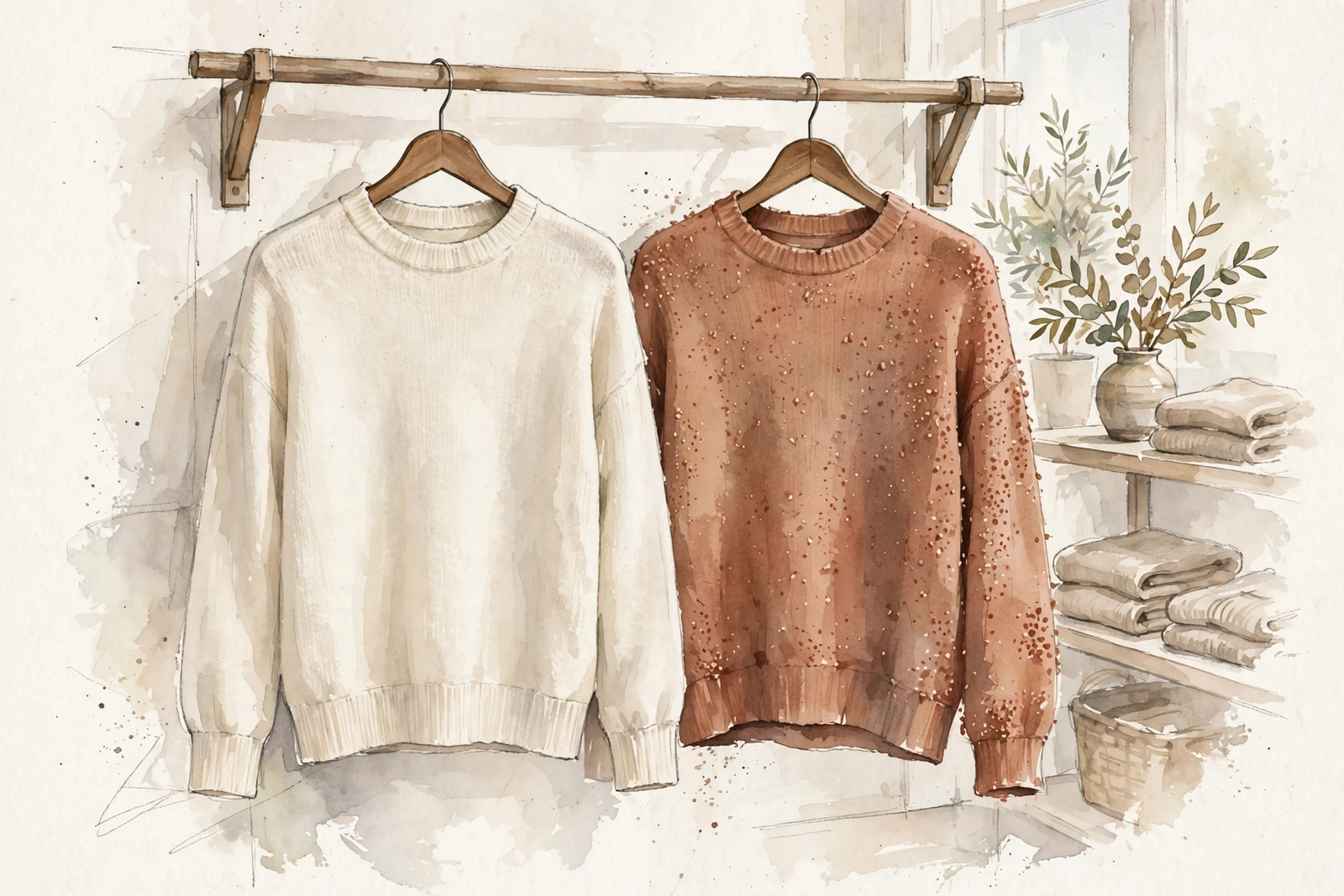
Here is the distinction most guides skip: pilling, by itself, convicts nobody. A new sweater that pills in its first few wears and then settles — each removal leaving less behind than the last — is breaking in normally. The loosest fibers in any yarn leave early; once they are gone, the surface stabilises. De-pill it, wear it, and expect the problem to fade.
The warning pattern looks different in three specific ways. The pills are everywhere, including places that barely rub — the middle of the back, the front of a sleeve. The pilling keeps worsening instead of slowing, returning in full after every clearing. And the fabric underneath is thinning, going slack or sheer where the pills are thickest. That combination is not a laundry problem. It is the yarn itself — short-fibered and weak — announcing its quality, and no washing routine will talk it out of it.
Which makes pilling a buying signal, read in arrears. You cannot test for it in the store, but you can do the next best thing: check what is visible before you buy — fiber content on the label, and construction with our 60-second construction check — then let the first month of wear deliver the rest of the verdict. A sweater that fails the three-part test above has told you something worth acting on: it belongs in the edit pile when you next run a closet audit, not in the rotation you rely on.
Remove them by cutting, not pulling. Prevent them by rationing friction. And judge them by their pattern, not their presence. A pill is information — read it properly and it tells you how to care for the sweater you have, and how to choose the next one.