Scroll any sweater listing long enough and the phrase appears: drop shoulder. It sits in the product description next to the fabric content, presented as if everyone already knows what it means — and what it will do to the fit. Almost nobody does. It is one of the most common fit details in modern casual clothing, and one of the least explained.
Here is the short version: a drop shoulder is a pattern detail, not a size. It describes where one specific seam is placed — and that seam quietly decides whether a sweater reads relaxed and intentional, or just big. Once you know how to find it, you can judge the fit from a product photo before the garment ever reaches your door.
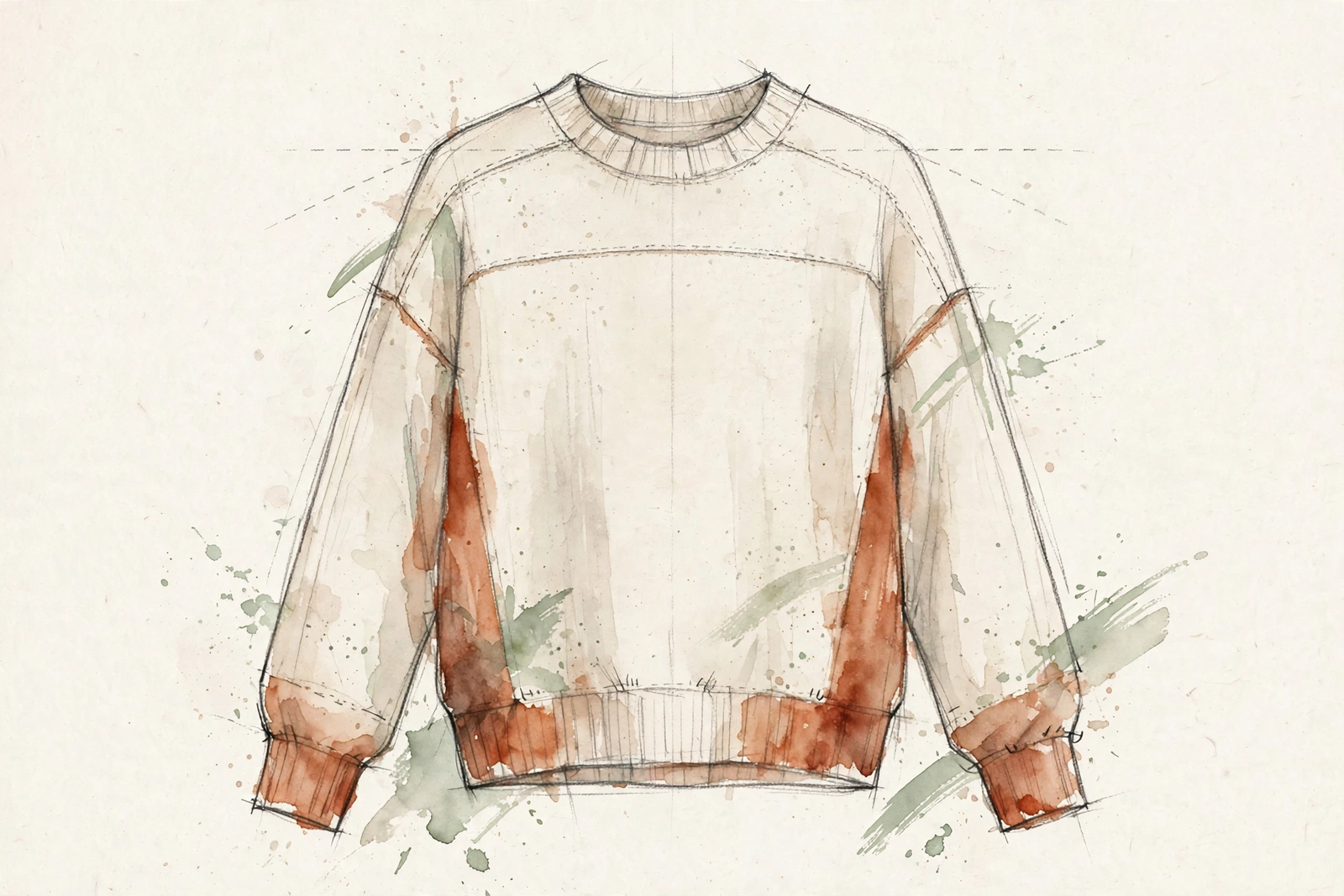
The seam test: find the seam, measure the drop
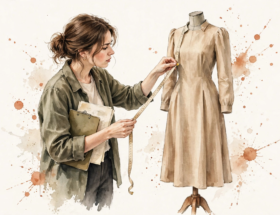
Every shoulder is built one of two ways. In a set-in sleeve, the seam where sleeve meets body sits exactly on your natural shoulder point — the corner where your shoulder turns into your arm. That is the construction behind blazers, dress shirts, and anything meant to look structured.
In a drop shoulder, that same seam is moved down — off the shoulder point and onto the upper arm. Commonly it lands 1 to 4 inches below the natural shoulder line, and in very relaxed cuts it can reach toward the middle of the upper arm. Because the sleeve starts lower, it is built differently too: a lower sleeve cap and a wider, lower armhole underneath.
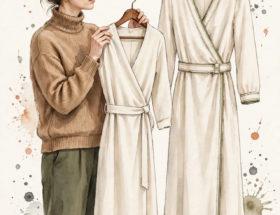
The test works on a hanger, on your body, or in a listing photo. Stand the garment up (or find it on the model) and trace the shoulder seam. If it crosses the arm noticeably below the shoulder point, it is a drop shoulder — whatever the listing calls the fit. If the seam sits on the corner, it is set-in. No label required: the seam is the fact, in the same way the garment measurements are the facts behind a size label.
Drop is a pattern, not a size
The most common misunderstanding: that a drop shoulder is just an oversized garment, and that you can get the same effect by sizing up. You cannot.
Sizing up a set-in-shoulder sweater makes everything bigger in proportion — but the seam still sits on your shoulder point, the sleeve cap stays high, and the armhole stays where it was drafted. A drop shoulder is drafted differently from the start: the body is cut wider across the shoulder line precisely because the sleeve will attach lower down. The proportions are different, not just the dimensions.
This is why two sweaters in the same size, with the same chest measurement, can look completely different on. One is a set-in cut worn true to size. The other is a dropped pattern doing exactly what it was designed to do. Judging them by the size tag alone — the mistake the 60-second construction check is built to catch — tells you nothing about either.
What it does to the silhouette
Move the seam down and the whole read of the garment changes. The shoulder line softens and slopes instead of ending in a crisp corner. The body falls straighter, with minimal taper, and the sleeve looks wider because it begins further down the arm. The result is the familiar boxy, relaxed, slightly slouchy silhouette of modern casual wear.
Two consequences follow. First, a drop shoulder reads casual even at true size — the ease is in the pattern, so a correctly fitted drop-shoulder sweater still looks relaxed. Second, it softens the shoulder itself: there is no defined shoulder point, so the garment does not give your frame the structure a set-in sleeve does. That is a style choice, not a flaw — but it is a choice the pattern has already made for you.
You will meet it most often in sweaters, where it is the dominant casual construction, and in tees, sweatshirts, and hoodies. You will rarely meet it in tailoring, and that split is the point: set-in says structured, drop says ease.
When it looks intentional — and when it swamps
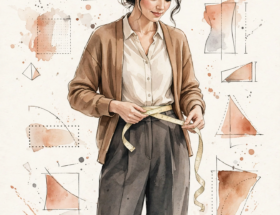
A drop shoulder flatters when the proportions around it are in balance. The practical check is where the seam lands on your arm: around 1 to 2 inches below your shoulder point reads as a deliberate design detail on most frames. The body should carry roughly 2 to 4 inches of bust ease over your own measurement — enough for the intended relaxed drape, not so much that the fabric pools.
It overwhelms when the drop is deep and everything else follows it down: a seam approaching mid-upper-arm, sleeves that run long, and a body with far more ease than the design needs. On a smaller frame, that combination stops reading as relaxed and starts reading as borrowed. The garment wears you. If you love the detail but not the volume, that is a sizing question — which brings us to the decision most listings never explain.
Should you size down? Only if you want less volume
Because the ease is drafted in, your true size gives you the intended fit. A drop-shoulder sweater in your normal size is supposed to look the way it looks on the model — relaxed through the shoulder, straight through the body. Buying your usual size is not “ending up oversized”; it is the design working as drafted.
Size down when you want the dropped seam as a detail but with less fabric overall — a closer body, a slightly shorter sleeve. What you cannot do is size down into a set-in fit: the seam still sits below your shoulder point, because that is where the pattern puts it. Choose the size for the volume you want, and let the seam be the seam. And when a listing uses the words loosely — “oversized,” “relaxed,” “drop,” interchangeably — translate them the way you would any trend word: back into seams, measurements, and shapes.
Care: fold it, don’t hang it
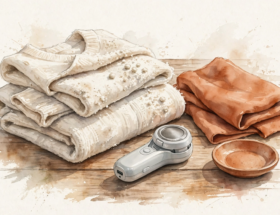
One care rule follows directly from the construction. A knit with a dropped shoulder has no firm shoulder point to carry its weight on a hanger; the fabric hangs from a lower, softer part of the garment, and the shoulder area distorts under its own weight over time — bumps and stretched points exactly where you least want them. Fold drop-shoulder knits and store them flat. It takes ten seconds and it protects the one detail that defines the garment.
What the seam tells you
“Drop shoulder” on a listing is not marketing filler; it is the pattern telling you, in advance, how the garment will sit, drape, and read. Find the seam. If it sits an inch or two below the shoulder point, expect ease that was designed, not added. If it sits far lower, expect drama — and check the sleeves and ease before you commit. One seam, honestly read, replaces most of the guessing.