The dress is 40% off. It's the one you've been eyeing for weeks. And there, in small print: final sale — no returns or exchanges. You buy it. It doesn't fit. Now you own a $90 lesson in reading the fine print.
Here's the reframe that changes every final-sale decision: the discount isn't a reward — it's the price of your option to return. The retailer is transferring the fit risk to you and paying you for it in the form of a lower price. Sometimes that's a fair trade. Often it isn't. This checklist tells you which.
The final-sale checklist
Run through all four before buying:
1. How certain is the fit? Have you tried this exact item on, in this exact size? Do you own something from this brand in this cut that fits perfectly? Certainty is the only currency that spends on final sale. If you're guessing between sizes, you're gambling — and the house set the odds.
2. How deep is the real discount? Not the claimed "was" price — the price versus what you'd pay for a returnable version of the same thing. A 15% discount for giving up returns is a bad trade. 40–50% starts to be interesting. Below 30%, you're barely being compensated for the risk.
3. What's the total loss if it's wrong? Not just the price — the price plus the annoyance of reselling, donating, or staring at it in your closet. If the item costs little enough that you'd shrug and gift it to a friend, the risk is small. If it's a considered purchase, the risk is the full amount.
4. Is there any fit information? Garment measurements, model stats, reviews mentioning fit — our size-chart method applies here with extra force. Final sale with good measurements is a calculated risk. Final sale with no measurements is a blind bet.
| Situation | Verdict |
|---|---|
| Tried it on in store, now buying online final sale | Buy — fit certainty is near total |
| Own the same brand/cut, deep discount, measurements check out | Buy — calculated risk, fair price |
| Between sizes, 20% off, no measurements | Walk away — bad trade |
| Never tried the brand, final sale, "was $200 now $120" | Walk away — you're paying for the story, not the dress |
When walking away is the win
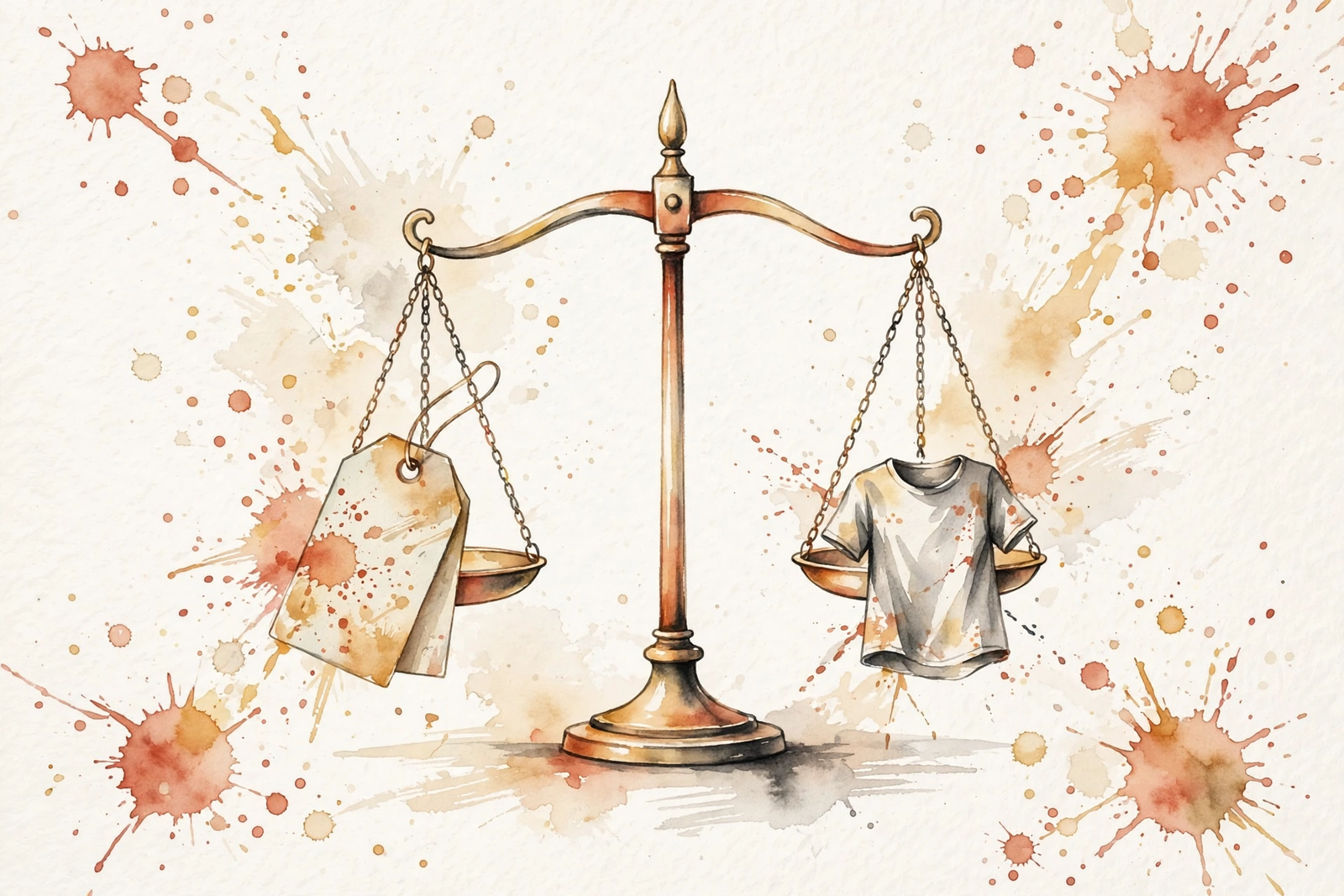
This is the part the sale countdown timer doesn't want you to hear: "don't buy" is a complete decision. The money you didn't lose on a final-sale mistake is worth exactly as much as money you saved. Our dress-comparison framework treats "neither" as a valid outcome — final sale deserves the same discipline, with higher stakes.
The retailers count on urgency overriding arithmetic. The timer, the "only 2 left," the crossed-out price — they're all designed to make you decide fast. The checklist is designed to make you decide well. It takes ninety seconds. The timer can wait.

What the checklist gives you
Final sale stops being a trap and becomes a tool: a way to buy things you know fit at prices you'd never otherwise see. The discount is fair compensation for risk you've already eliminated. Everything else — the guesses, the maybes, the "it's only $40" — is the risk transfer working exactly as designed. Walk away, and let someone with more certainty take the deal.