She's a size 8. Except at the store where she's a 6, and the other store where she's a 10, and the European brand where she's a 38 — which is a 6, except when it isn't. She orders her "usual size" online and the return rate on her orders tells the story.
The problem isn't her body. It's the label. Size labels are marketing; garment measurements are data. Vanity sizing, junior vs. misses cuts, and fifty years of size drift mean the number on the tag carries almost no information. The size chart does — if you read the right column. Here's the method.
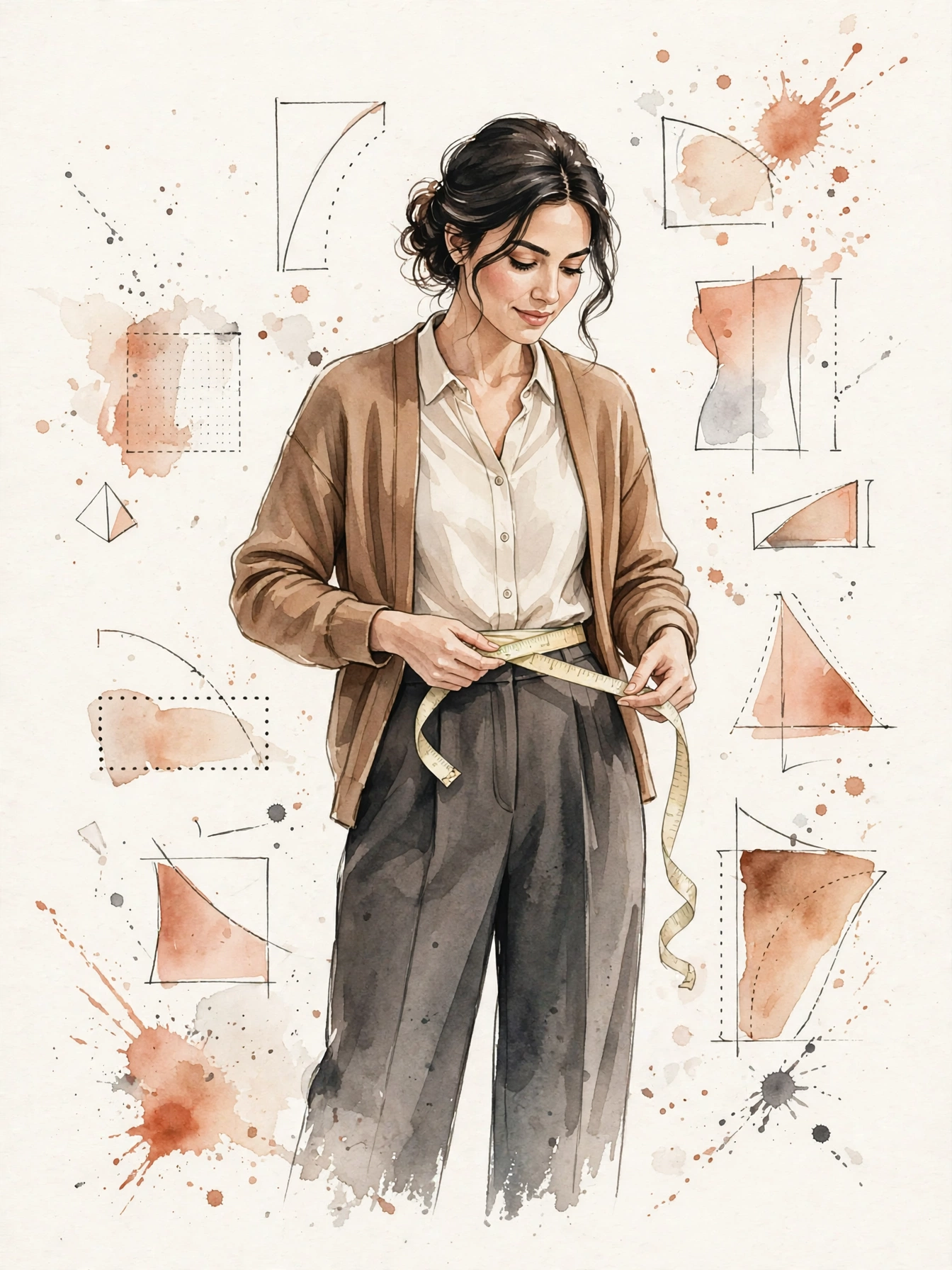
Step 1: Measure yourself once
Get a soft tape measure and record four numbers. Do it once, keep them in your phone, update yearly:
- Bust: around the fullest point, tape level, breathing normally.
- Waist: the natural waist — the narrowest point, usually an inch or two above the navel. Not where your jeans sit.
- Hip: around the fullest point of the hips.
- Inseam: from the inner thigh to the ankle bone (for trousers).
That's the whole kit. Everything else on a size chart is derived from these.
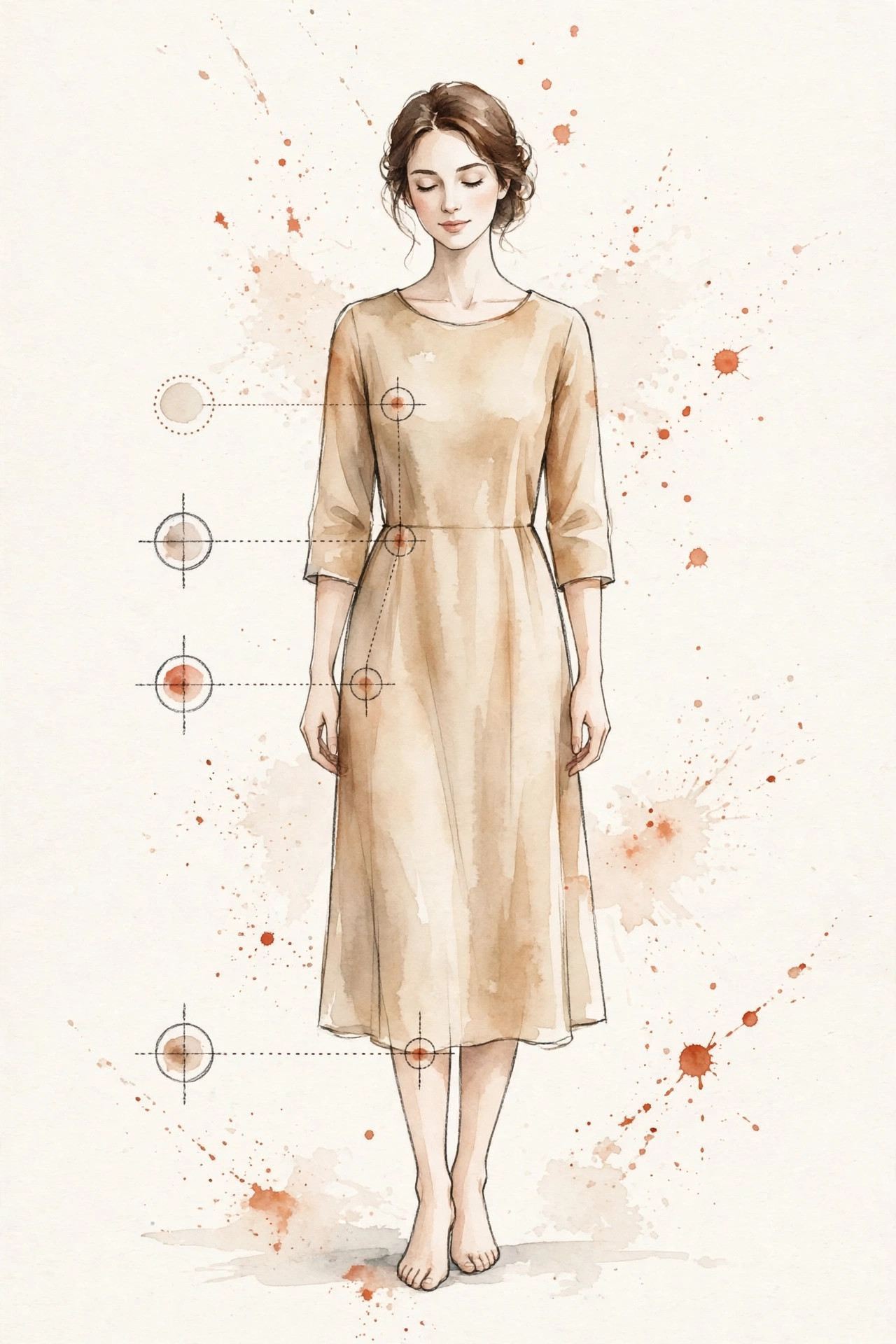
Step 2: Read the garment measurements, not the size column
This is the core skill. Most size charts have two kinds of numbers: body measurements (the size of the person the garment is designed for) and garment measurements (the size of the actual garment). Garment measurements are more useful — they already include the designer's intended ease.
The method: find the garment's chest/waist/hip numbers, compare them directly against yours, and ignore the size label entirely. If your waist is 29 inches and the garment waist is 30, it fits — whether the tag says 6, 8, M, or 38.
| What to check | Where to find it | What it tells you |
|---|---|---|
| Garment chest/waist/hip | Size chart "garment measurements" tab or product specs | Actual fit — compare directly to your numbers |
| Body measurements column | Standard size chart | The intended wearer's size — useful, less precise |
| Inseam / length | Size chart or description | Whether it needs hemming |
| Model's measurements + size worn | Product photos section | A real-body reference point |
Why the same size fits differently everywhere
Three reasons, none of them you:
Vanity sizing. Many brands have quietly enlarged their sizes over decades so customers feel smaller. A vintage size 10 and a modern size 10 can differ by inches.
Different blocks. "Junior," "misses," and "plus" aren't just size ranges — they're different body-shape templates. A misses 8 and a junior 9 are cut for different proportions.
Different markets. EU, UK, and US sizing diverged long ago, and fast-fashion brands often convert sloppily. Always check the brand's own chart, never a generic conversion table.
The fit-tolerance rule
Not every inch matters equally. Knits and stretch fabrics forgive 2–3 inches — if you're between sizes, the fabric absorbs the difference. Tailored pieces forgive nothing — a blazer or structured dress needs the garment measurements to match yours within about an inch, especially at the shoulders and waist.
When between sizes: size up in tailored pieces (taking in is easier than letting out), and trust the fabric in knits. And when a listing has no usable measurements at all — no chart, no garment numbers, no model info — treat it like the coverage checklist says: the listing is incomplete, and incomplete listings are a reason to hesitate, not to guess.
What the method gives you
One measuring session, kept in your phone, replaces years of size-guessing. The label stops being a verdict on your body and becomes what it always was: a brand's opinion. The numbers are the facts. Shop the facts.