Every season, fashion media invents a new vocabulary. A few years ago everything was "quiet luxury." Then "demure" had its summer. Then came "mob wife," "office siren," "brat," and a dozen others — each arriving with breathless explainers, each gone within months.
Here's what nobody says plainly: trend words are just compressed descriptions of clothes. Silhouette + color + attitude, packed into two catchy words. Once you learn to decompress them, you don't need the explainers anymore. You can translate any trend word yourself — including the ones that haven't been invented yet.
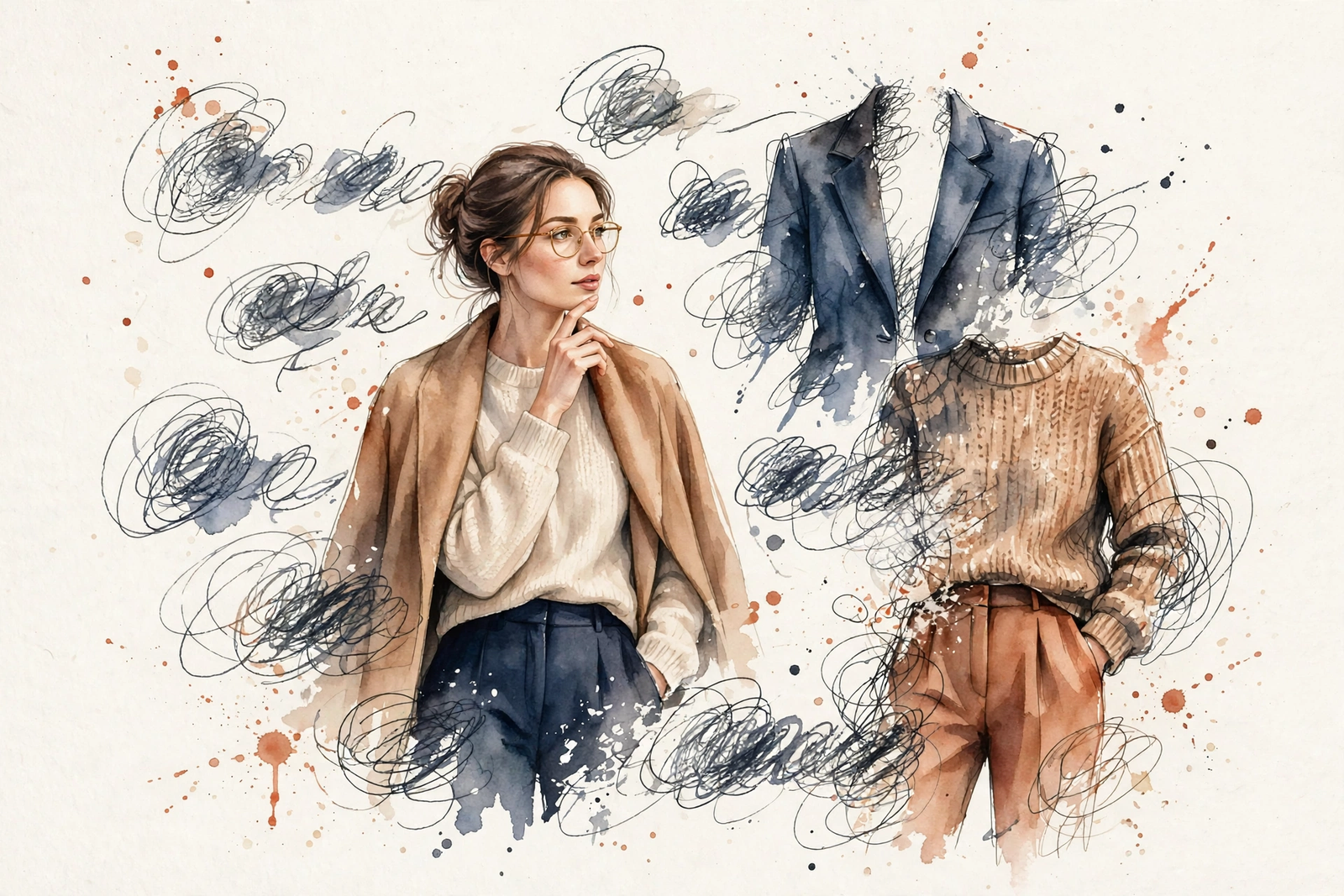
The decoder: three questions
For any trend term, ask:
1. What silhouettes does it describe? Strip the poetry. "Office siren" means fitted pencil skirts, tailored blazers, pointed shoes. "Demure" means higher necklines, longer hems, softer shapes. Every trend word, decoded, is a list of shapes.
2. What colors and textures? "Quiet luxury" is neutrals — camel, cream, navy — in expensive-looking fabrics: cashmere, silk, fine wool. "Mob wife" is black, gold, faux fur, leather. The palette is usually the most copyable part.
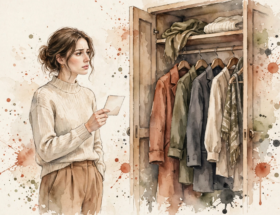
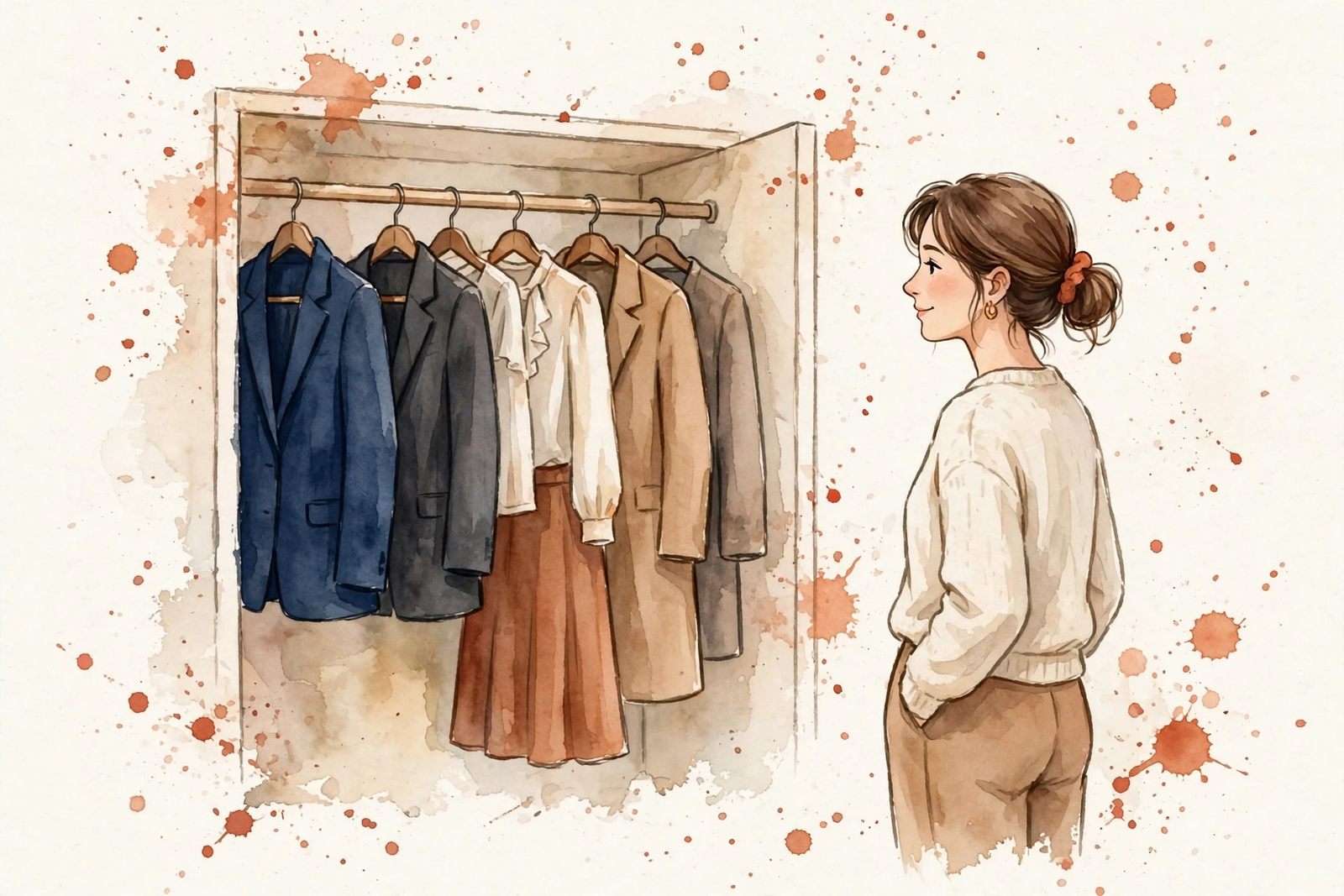
3. Do I already own its ingredients? This is the question the trend cycle hopes you won't ask. Most trends are recombinations of basics. "Demure" is the modest blouse and midi skirt you already have. "Quiet luxury" is your neutral tailoring worn without logos. The trend didn't invent the clothes; it invented a name for wearing them together.
Try it: four translations
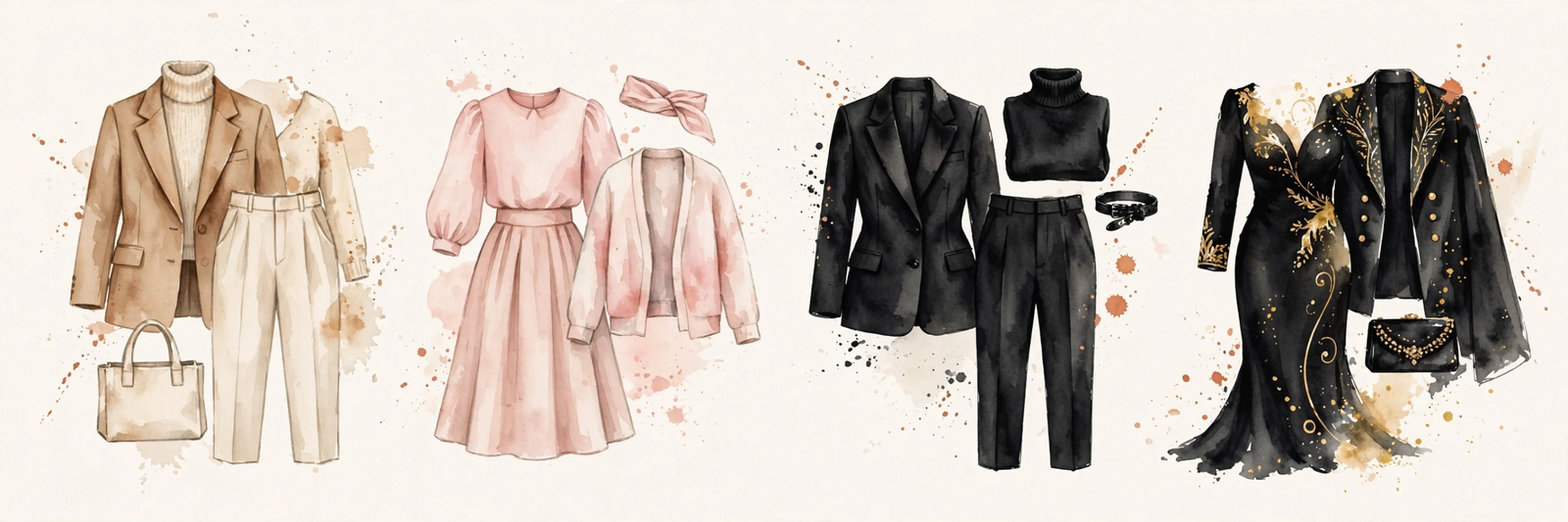
| Trend word | Silhouettes | Colors & textures | You probably own |
|---|---|---|---|
| Quiet luxury | Tailored blazers, straight trousers, simple knits | Camel, cream, navy; cashmere, silk, fine wool | The neutral pieces in your closet, worn logo-free |
| Demure | Higher necklines, midi hems, soft cardigans | Blush, cream, soft pastels | The modest blouse + skirt combination |
| Office siren | Fitted pencil skirts, nipped blazers, pointed flats | Black, charcoal, pinstripe | The workwear you already wear, styled sharper |
| Mob wife | Faux fur coats, fitted dresses, statement gold | Black, gold, animal print | The bold going-out pieces you save for nights |
These are examples, not a glossary — the specific words will keep churning. The method is the durable part.
The "already own it?" check
Before buying into any trend word, do the translation, then open your closet. If you can assemble 80% of the look from what you own, you don't have a shopping need — you have a styling opportunity. Buy only the missing ingredient, if any. This is the same discipline as our trend-or-timeless framework: the trend is only worth money if it survives translation into your actual life.
Why the words keep changing
Trend words are marketing, not meteorology. They exist to make familiar clothes feel new enough to buy again. That's not a conspiracy — it's just the industry's job. Your job is different: to know that "quiet luxury" is a name for clothes that were always good, and that good doesn't expire when the word does.
Learn the language and you stop needing translators. The next trend word will arrive on schedule. You'll decode it in thirty seconds, check your closet, and get on with your day.